
Body Composition Analysis in Abu Dhabi: What Is Basal Metabolic Rate (BMR)?

Body composition analysis estimates the distribution of body water, fat-free mass, muscle, and fat. Basal metabolic rate (BMR) is an estimate of the energy the body uses at rest for essential functions. The test may help track trends over time, but it cannot diagnose a hormone disorder or determine treatment on its own

Key points

• Weight and body mass index (BMI) do not fully describe muscle and fat distribution.
• Bioelectrical impedance analysis (BIA), including multi-frequency devices, provides
estimates affected by hydration, food, and exercise.
• Visceral fat surrounds internal organs and is associated with higher metabolic and
cardiovascular risk; interpretation requires clinical context.
• Do not follow extreme diets or change medication based on a single device reading

What does body composition analysis measure?

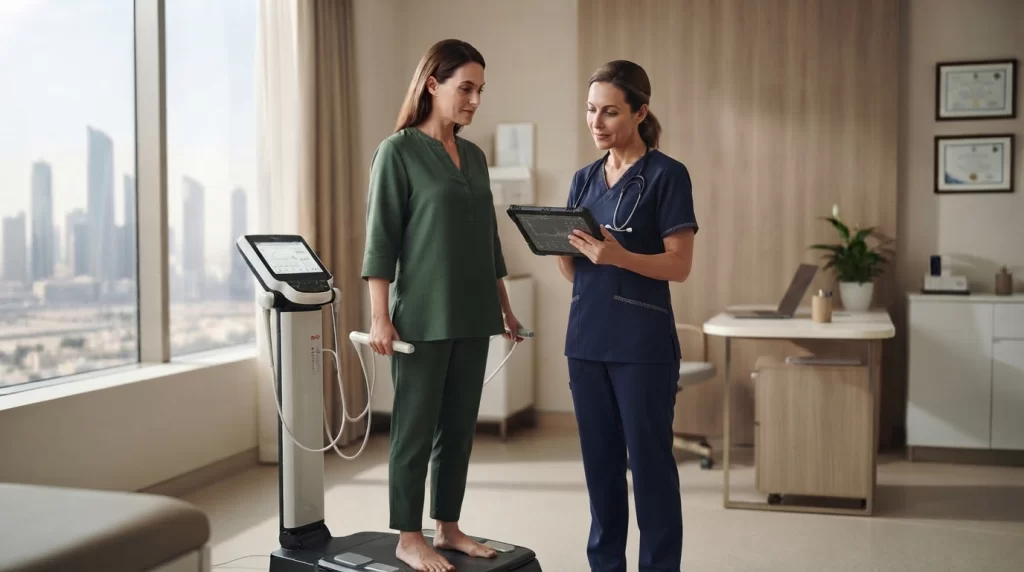
Depending on the device and method, the report may estimate total body water, fat-free mass, skeletal muscle mass, fat mass, visceral-fat indicators, and extracellular-water ratios.
BIA works by measuring how body tissues conduct a small electrical current. Water-rich
tissues conduct electricity differently from fat, and algorithms then estimate body
compartments using impedance and personal data. The result is therefore not a direct
measurement of every tissue, and readings should not be compared across different devices or inconsistent conditions without caution

What is the difference between subcutaneous and visceral fat?

Subcutaneous fat lies directly under the skin, while visceral fat is located deeper in the
abdomen around internal organs. Higher visceral-fat levels are associated with greater
metabolic and cardiovascular risk, but a device value should be interpreted alongside waist
circumference, medical history, blood pressure, and glucose and lipid tests when appropriate.
Not every abdominal bulge represents visceral fat. It may also reflect subcutaneous fat,
bloating, posture, or reduced muscle strength. For that reason, body-composition analysis
should support a broader assessment rather than serve as the sole basis for a cosmetic or medical decision.

What is basal metabolic rate (BMR)?

BMR is an estimate of the energy required at rest to support breathing, circulation, and other essential functions. It is influenced by age, sex, height, weight, fat-free mass, and health status. BMR is not the same as total daily calorie needs, which also include activity and digestion.

Frequently asked questions

Q1:Does stable body weight mean I am not losing fat?
Not necessarily. Fat and muscle may change while body weight stays similar, but one reading cannot prove this. Use repeated measurements under comparable conditions alongside waist measurements and clinical review.
Q2:Can the InBody 770 diagnose a hormone disorder?
No. A result may raise a question for clinical discussion, but hormone disorders require a medical history, examination, and appropriate laboratory tests.
Q3: Is the test suitable for everyone?
Tell the clinician if you are pregnant or have an implanted medical device, such as a
pacemaker, because some devices or protocols may not be appropriate. Follow the advice of the clinic and your treating clinician.
Q4: Do I need BIA if my BMI is normal?
Not necessarily. BMI is a general screening measure and does not describe fat distribution or muscle, but a normal BMI does not automatically make BIA necessary. The decision should reflect your health goal, symptoms, and clinical assessment.
Q5: Can the result determine my daily calorie target?
BMR can be one estimate used when considering total daily energy needs, but it is not a diet prescription. Daily needs also depend on activity, age, health status, and measurement uncertainty. A registered dietitian or physician can help set a safe plan, especially when a chronic condition is present.

Conclusion

Body composition analysis can support trend monitoring, but it is not a substitute for medical assessment or appropriate laboratory testing. Use it as one part of a balanced plan involving nutrition, physical activity, sleep, and professional review before making treatment decisions

Radiofrequency Microneedling in AbuDhabi: How Does It Help Stimulate Collagenand Improve Skin Firmness?

Have you noticed changes in your skin texture or a decrease in skin firmness? Have some old acne scars become more noticeable, or are you looking for options to improve the appearance of enlarged pores and fine lines?
There are several possible causes behind these changes. They may be associated with aging, sun damage, or tissue changes following inflammation. Other factors may also contribute, and these can vary from person to person.
One of the techniques a physician may discuss for certain skin concerns is Radiofrequency Microneedling (RF Microneedling).
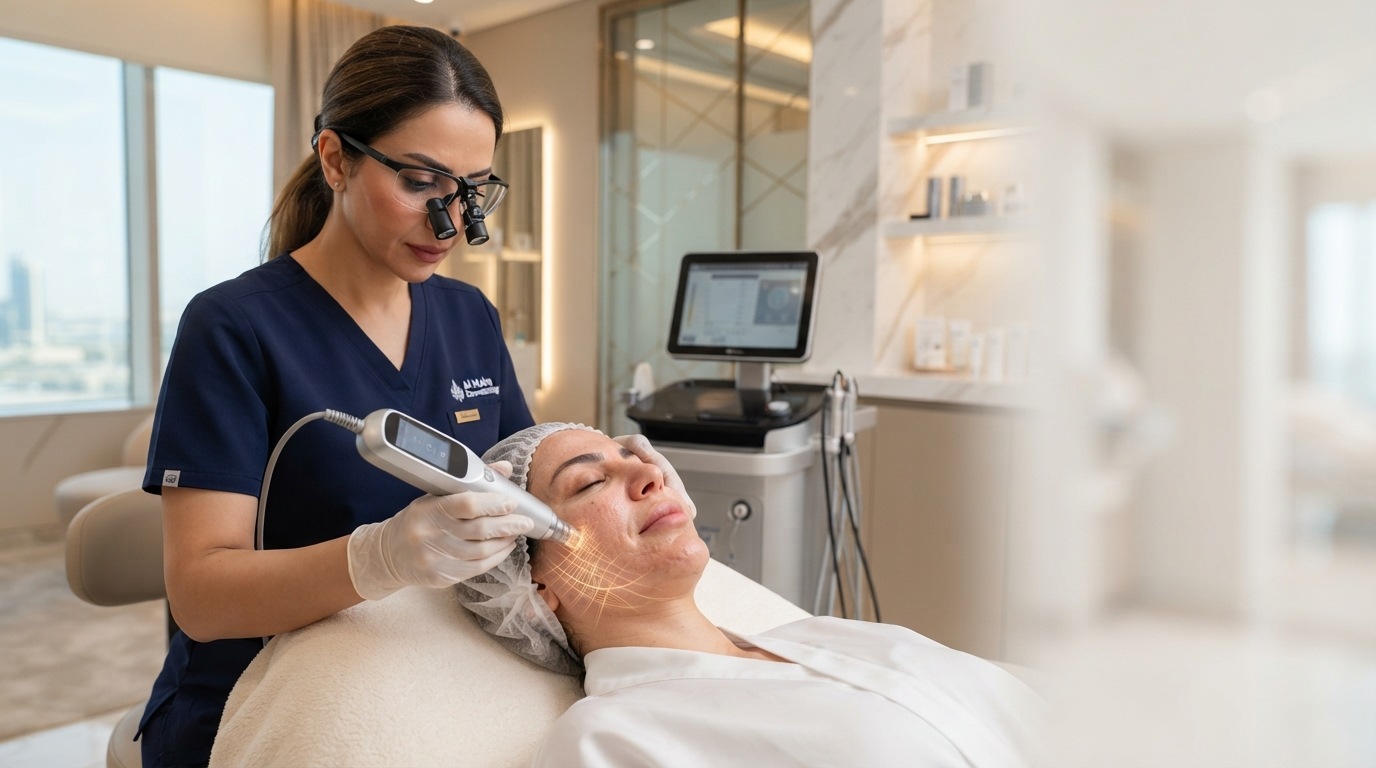
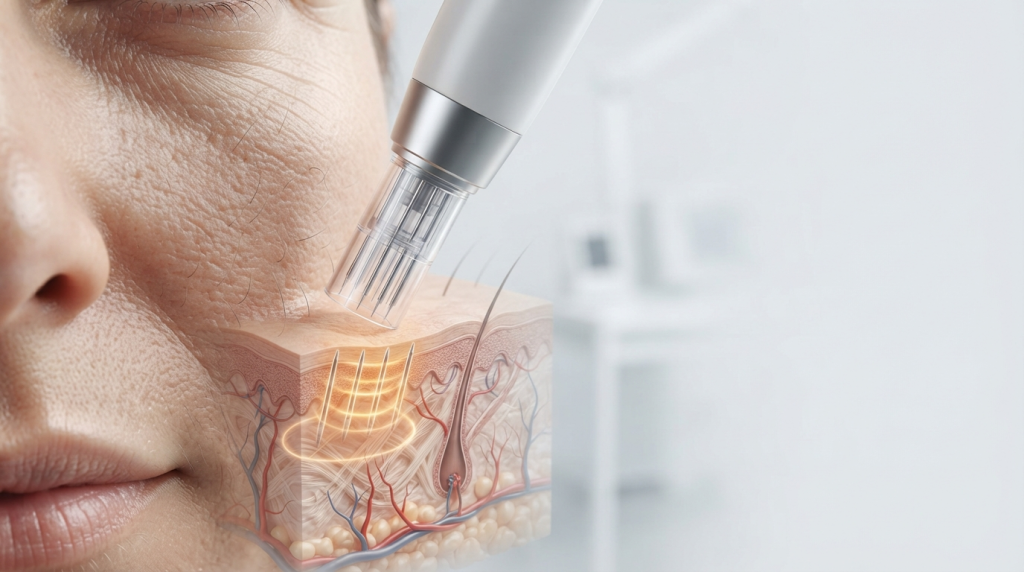
The treatment combines the insertion of fine needles into the skin with the delivery of
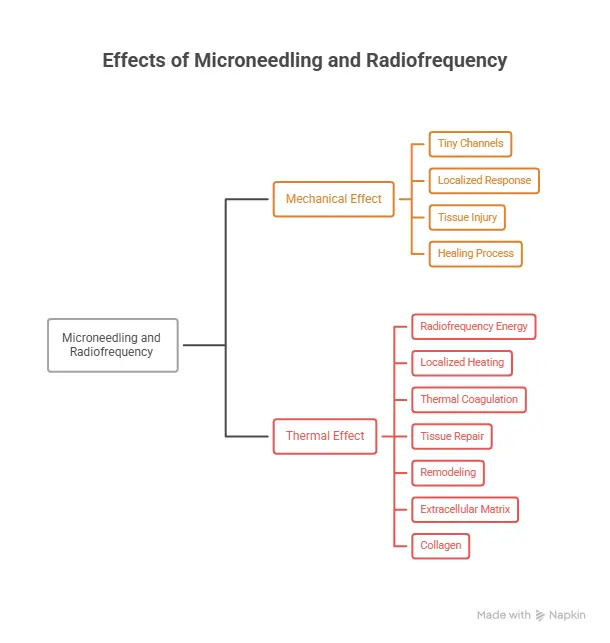
radiofrequency energy to targeted tissues. This creates a localized thermal effect that may stimulate tissue response and remodeling.
However, it is important to distinguish between the mechanism of the treatment and its clinical outcome. A thermal effect within the skin does not necessarily mean a specific degree of tightening or complete scar removal. Results and risks vary depending on the individual condition, treatment method, and device used.

1. What Is Radiofrequency Microneedling?

Radiofrequency Microneedling is a medical technique that combines microneedling with
radiofrequency energy.
During the procedure, fine needles penetrate the skin according to settings determined by a qualified practitioner. Radiofrequency energy is then delivered to the targeted tissues, creating localized heating that may result in thermal coagulation in the treatment areas.
Unlike traditional mechanical microneedling, the effect is not limited to needle penetration. It also involves the thermal energy generated by radiofrequency.
Devices used for RF Microneedling vary in their needle design, energy delivery method, and ability to adjust treatment depth and settings. Therefore, the specifications of one device should not be generalized to all RF Microneedling devices.
The treatment may be considered as part of a plan targeting certain skin concerns, but its suitability depends on medical assessment, the specific device, and its approved instructions for use.

2. What Is the Relationship Between Collagen and Skin Firmness?

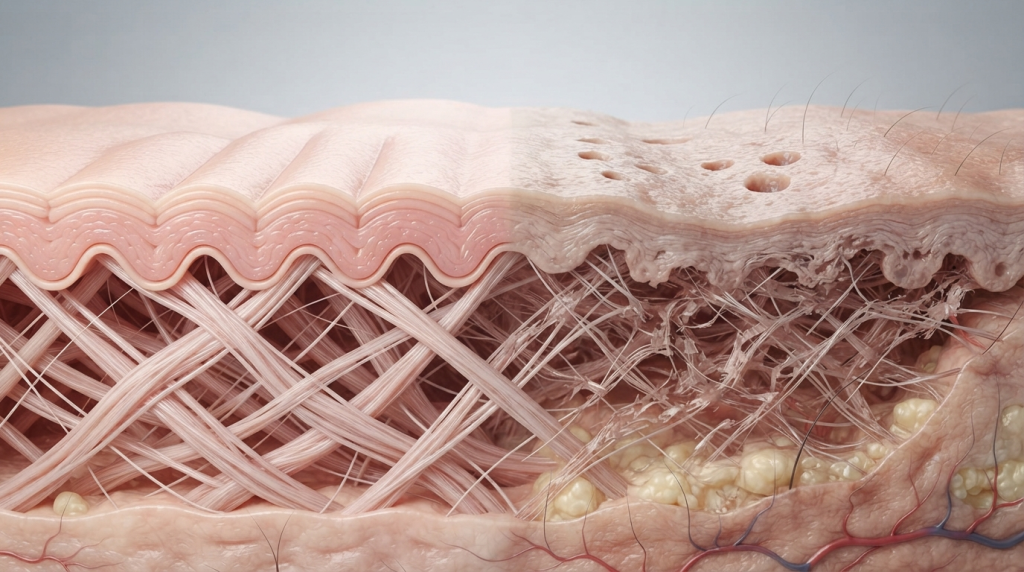
Collagen is one of the primary proteins in the dermis and contributes to the structure and
strength of the skin. Elastin contributes to skin elasticity.
As we age, gradual changes occur in the structure and components of the skin. Repeated
exposure to ultraviolet (UV) radiation can also cause harmful changes to collagen and other components of the dermis.
These changes may appear as:
• Fine lines
• Wrinkles
• Reduced skin elasticity
However, not every skin concern can be explained by a lack of collagen. Enlarged pores, scars, and skin laxity may have different causes and mechanisms.
Therefore, identifying the nature of the skin concern should come before selecting a treatment that may help improve its appearance.

3. How Does Radiofrequency Microneedling Work?

However, this should not be described as complete collagen rebuilding, nor should it be
considered a guarantee of skin tightening or scar removal.
The effect also depends on how the device is used, needle depth, energy level, treatment area, and the tissue response.

Why Should Skin Treatment Begin With Medical Assessment?

Skin concerns may look similar on the surface, but their causes and characteristics can be very different.
Not all acne scars are the same. Reduced skin firmness does not always result from one single factor, and enlarged pores may also have multiple causes.
Medical assessment can therefore help determine the nature of the concern, discuss whether RF Microneedling is appropriate, and clarify potential results, risks, and alternatives.
Imaging or additional assessments may be used when appropriate, but they are not a fixed requirement for every case.
The goal is to select a treatment based on the skin’s needs not simply to use a device because it is available

Conclusion: Is Radiofrequency Microneedling Right for Your Skin?

Radiofrequency Microneedling combines microneedling with the delivery of thermal energy to targeted tissues. A physician may consider it for certain skin concerns, including some types of acne scars and uneven skin texture.
However, the suitability of the procedure and its potential results vary from person to person.
Skin tightening, scar removal, or a specific degree of improvement cannot be guaranteed.
The procedure also carries potential risks, making medical assessment and a clear discussion of benefits, alternatives, and precautions important.
At Everlast Wellness Medical Center in Abu Dhabi, skincare begins with assessing the skin’s needs and discussing available options with the medical team before determining an appropriate treatment plan.
If you would like to know whether this technique may be suitable for your skin, you can book a consultation to discuss your goals, available options, and potential risks.

Because choosing the right treatment starts with understanding your skin not the name of the device.

How Does Estrogen Decline Affect SkinCollagen and Elasticity?

Declining estrogen, particularly during menopause, can be associated with changes in skin structure, collagen levels, and skin elasticity. Profhilo may help improve certain aspects of skin quality, such as hydration and elasticity, in some patients. However, suitability and results vary from person to person, and a medical assessment is recommended.

How Is Estrogen Related to Skin Collagen?

Estrogen has several effects throughout the body, including on the skin and connective tissues.
As estrogen levels decline, particularly during the menopausal transition, changes may occur in skin thickness, elasticity, and collagen content.
Age, sun exposure, genetics, lifestyle, and other factors can also affect skin quality and collagen levels.

Why Does Skin Start Losing Firmness?

Collagen is one of the key proteins that provides the skin with structure and support.
As we age and experience hormonal changes, the skin’s ability to maintain this structure may
gradually change. This can contribute to:
• Reduced skin firmness.
• Dryness.
• Fine lines.
• Changes in skin texture.
• Reduced radiance.
• More visible skin laxity

What Is Profhilo?

Profhilo is an injectable treatment based on hyaluronic acid. It differs from traditional dermal fillers in terms of its intended purpose and application.
While traditional fillers are commonly used to add volume or enhance specific facial areas,
Profhilo focuses more on improving overall skin quality, including hydration and elasticity.
Clinical studies have reported improvements in certain measures of skin quality, although results vary between studies and individuals

Does Profhilo Change the Shape of the Face?

The primary goal of Profhilo is not to add volume or reshape facial features.
However, individual responses can vary depending on skin characteristics, treatment area,
injection technique, and other factors.
A medical assessment is therefore recommended before deciding whether the treatment is appropriate

When Should You Consult a Doctor?

If skin changes are sudden or severe, accompanied by other symptoms, or occurring alongside hormonal treatment or a medical condition, it is recommended to consult a qualified physician before undergoing any procedure.

Frequently Asked Questions

Q1: Does Low Estrogen Cause Skin Aging?
A: Declining estrogen can contribute to some age-related skin changes, particularly around menopause. However, it is not the only contributing factor.
Q2: Is Profhilo the Same as Dermal Filler?
A: No. Both may contain hyaluronic acid, but their intended purposes and applications are different.
Q3: Is Profhilo Suitable for All Skin Types?
A: Not necessarily. The skin and medical history should be assessed before treatment.
Q4: Are Profhilo Results Permanent?
A: Results are not guaranteed or permanent for everyone. The duration and response vary
between individuals.
Q5: Can Profhilo Be Combined With Other Treatments?
A: It may be possible in some cases, but the physician should determine the appropriate timing and
compatibility of different procedures.
Q6: Is Age Alone a Reason to Have Profhilo?
A: No. What matters more is the actual condition of the skin, the individual’s goals, and the medical assessment.

Profhilo at Everlast Wellness

At Everlast Wellness Medical Center in Abu Dhabi, treatment selection begins with an
assessment of the patient’s skin and individual needs.
The goal is to develop a treatment plan that is appropriate for the skin and based on realistic
expectations, rather than changing the natural facial features.
Individual results may vary. Consultation required.

Post-Pregnancy Melasma: Why Does ItAppear and How Can It Be Managed?

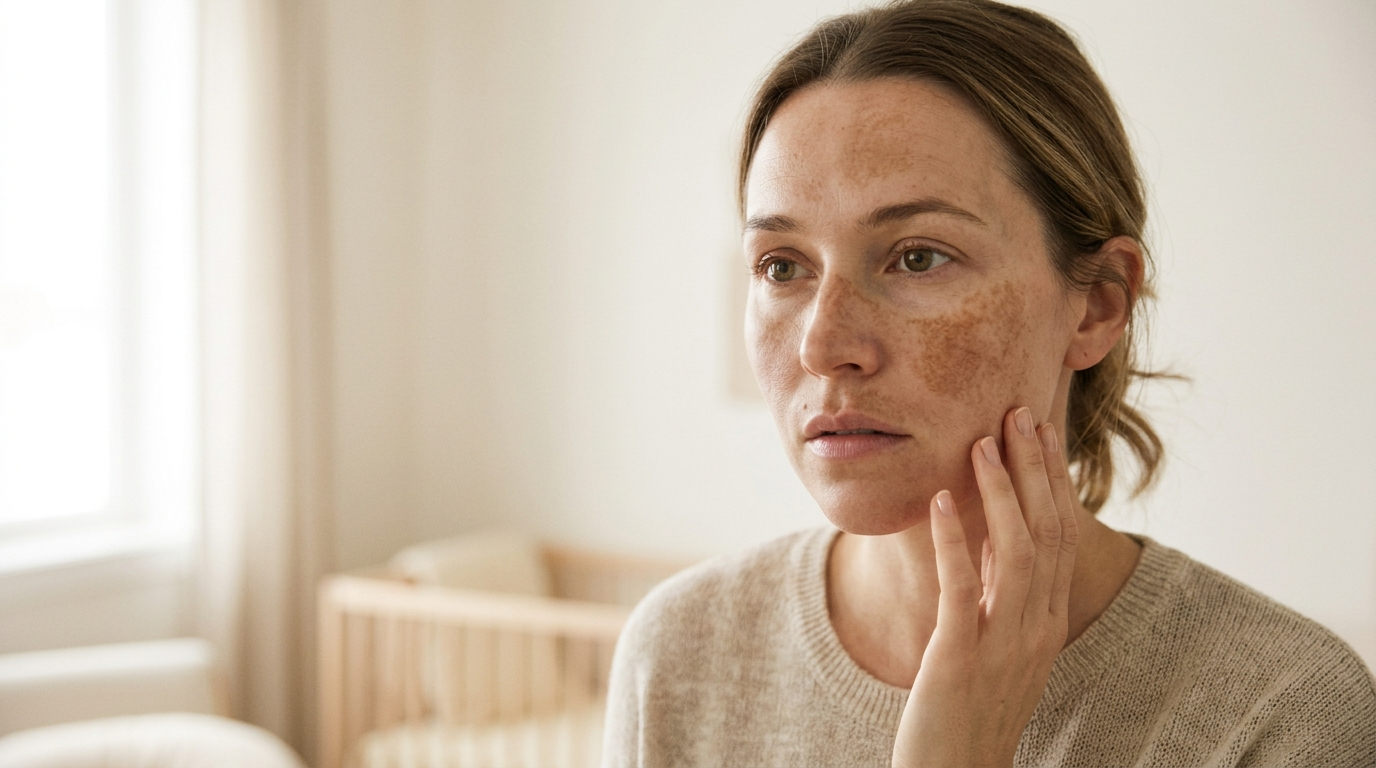
Have you noticed dark patches appearing on your cheeks, forehead, or upper lip during or after pregnancy?
Melasma is a common form of acquired hyperpigmentation that often appears as symmetrical brown or grayish patches on the face. Hormonal changes, including those that occur during pregnancy, can contribute to melasma, while sun and light exposure, genetics, and skin type may
also play a role.
The important thing to know is that melasma can often be improved, but it may return.
Managing it usually requires more than a single brightening treatment it involves identifying triggers, choosing an appropriate treatment plan, and maintaining the results over time.

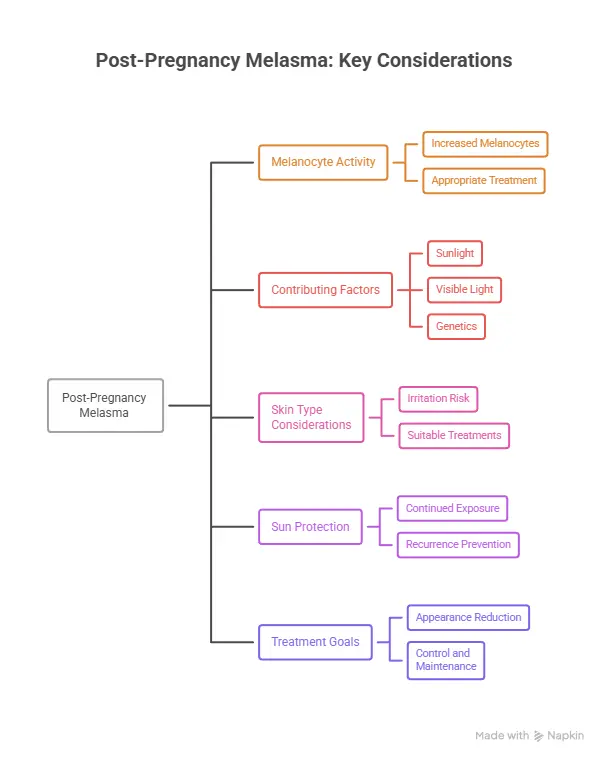
5 Things You Should Know About Post-Pregnancy Melasma

1. Melasma is not simply a superficial dark spot.
It can involve increased activity of melanocytes, the cells responsible for producing melanin, so
treatment needs to address pigmentation appropriately.
2. Hormones are not the only factor.
Pregnancy can trigger melasma, but sunlight, visible light, genetics, and other factors may also
contribute.

3. Darker skin types may require extra care.
Irritation from an overly aggressive or unsuitable treatment may increase pigmentation in some people.
4. Sun protection is part of treatment.
Even after pigmentation improves, continued exposure to sunlight and light may contribute to recurrence.
5. The goal is not always permanent removal.
A more realistic goal is to reduce the appearance of melasma, control it, and maintain
improvement for as long as possible.

What Exactly Is Melasma?

Melasma is an acquired disorder of skin pigmentation.
It usually appears as symmetrical dark patches on areas of the face such as:
• The cheeks
• The forehead
• The upper lip
• The nose
• Other facial areas
It develops when melanocytes become more active and produce increased amounts of melanin.
But why does this happen?
Melasma usually does not have just one cause.
Several factors may interact, including:
Hormonal changes + sun and light exposure + genetic predisposition + skin type.

Why Does Melasma Appear During Pregnancy?

Pregnancy causes significant hormonal changes in the body.
These changes may affect melanocyte activity, which is why some women notice new dark
patches or increased pigmentation during pregnancy.
This is why melasma is sometimes called the “pregnancy mask.”
After delivery, pigmentation may gradually become less noticeable in some women.
However, melasma can persist in others, particularly when triggers such as sun exposure remain present or when there is an underlying predisposition to pigmentation

Is Every Dark Spot After Pregnancy Melasma?

No.
This is an important distinction.
Not every dark patch that appears after pregnancy is necessarily melasma.
Other forms of pigmentation can occur following inflammation, acne, skin irritation, or other causes.
That is why appropriate treatment starts with identifying the type of pigmentation first.
This matters because a treatment that is suitable for one type of pigmentation may not be
appropriate for another

Why Can Melasma Be Difficult to Treat?

Melasma can be a recurring condition.
The pigmentation may improve for a period of time and then become more noticeable again.
This does not necessarily mean that treatment has “failed.”
New or ongoing triggers may contribute to recurrence, including:
• Sun exposure.
• Light exposure.
• Hormonal changes.
• Skin irritation.
• Inconsistent home care.
• Using unsuitable skincare products.
For this reason, melasma often requires long-term management, rather than focusing only on short-term skin brightening.

Frequently Asked Questions About Post- Pregnancy Melasma and Cosmelan

Q1:Does Pregnancy Melasma Go Away After Delivery?
A: It may improve in some women, but it can persist in others. Hormonal changes, sun
exposure, skin type, and other factors can influence how long the pigmentation remains.
Q2: Does Cosmelan Permanently Remove Melasma?
A: Permanent removal cannot be guaranteed. Treatment may improve the appearance of
pigmentation in some patients, but recurrence remains possible.
Q3:Can Cosmelan Be Used on Darker Skin?
A: It may be appropriate for some patients, but careful assessment and protocol selection are important. The goal is to improve pigmentation while minimizing unnecessary irritation.
Q4:Can Melasma Be Treated While Breastfeeding?
A: It depends on the ingredients included in the treatment protocol. The professional and home- care products should be reviewed with a physician before treatment begins.
Q5:Can I Wear Makeup After Treatment?
A: It depends on your skin condition and your physician’s instructions. If the skin is irritated or peeling, you may be advised to avoid certain products until the skin barrier has recovered.
Q6: Do I Still Need Sunscreen After Melasma Improves?
A: Yes. Sun protection remains important even after pigmentation improves. Environmental triggers can contribute to recurrence.
Q7: Does Every Dark Facial Spot Need Cosmelan?
A: No. Treatment should depend on identifying the type and cause of pigmentation first, followed by selection of the appropriate treatment plan

The Bottom Line: Managing Melasma Starts With Understanding the Cause

Post-pregnancy melasma can be associated with hormonal changes, but it is not simply a
hormonal condition.
Sun exposure, visible light, skin type, genetic predisposition, and skin irritation can all
influence pigmentation and its recurrence.
That is why the best starting point is not necessarily searching for the “strongest brightening
cream” or the “fastest treatment.”
It is understanding the pigmentation, assessing the skin, and building an appropriate
treatment and maintenance plan.
At Everlast Wellness Medical Center in Abu Dhabi, pigmentation treatment begins with an
assessment of the skin and the nature of the concern before an appropriate protocol is selected.
The goal is not simply to make the skin look lighter, but to develop a thoughtful approach to managing pigmentation while supporting the skin barrier and reducing factors that may
contribute to recurrence.
Individual results may vary. Consultation required.

Understanding Postpartum Hair Loss: Causes, Timeline & Treatment Options

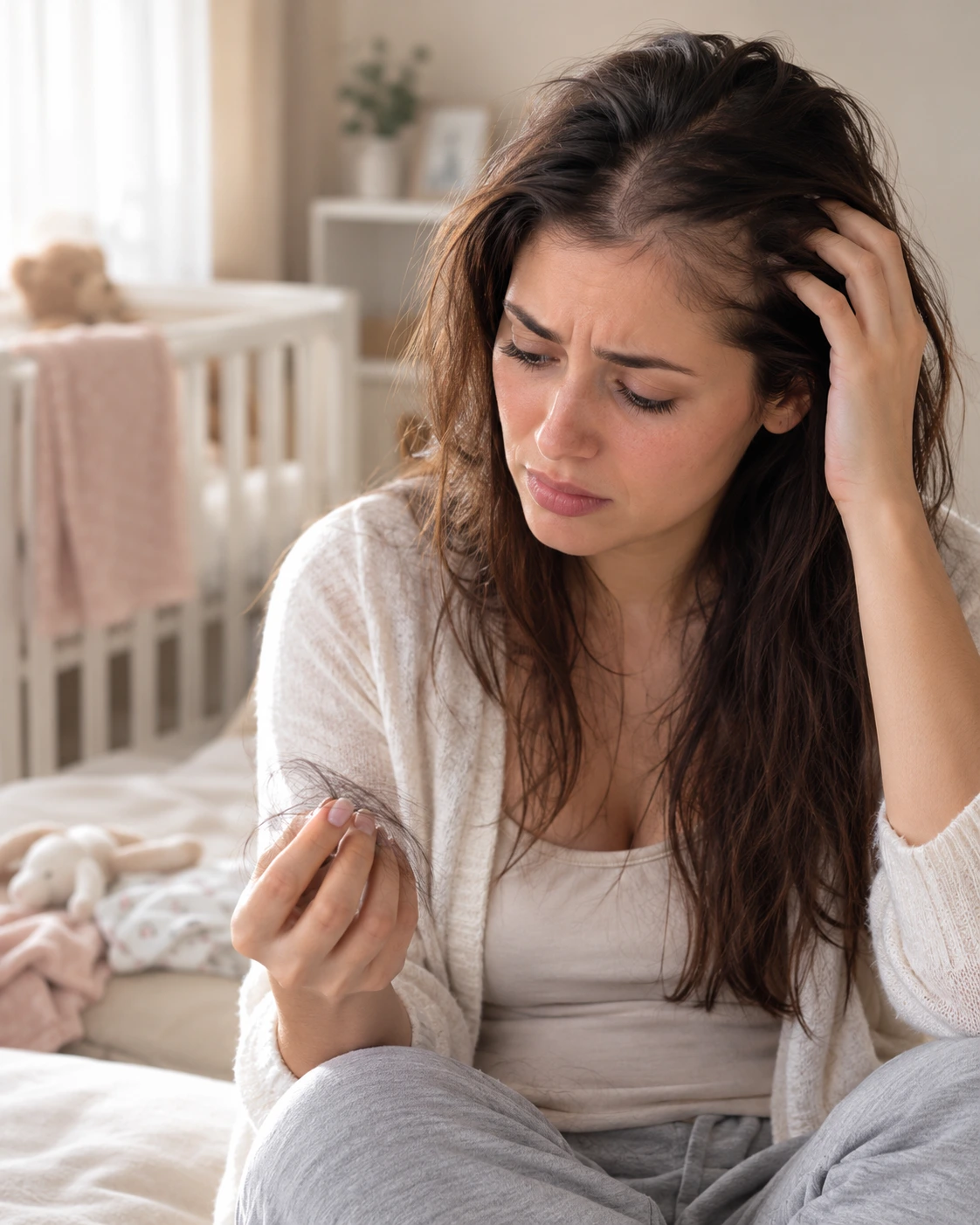
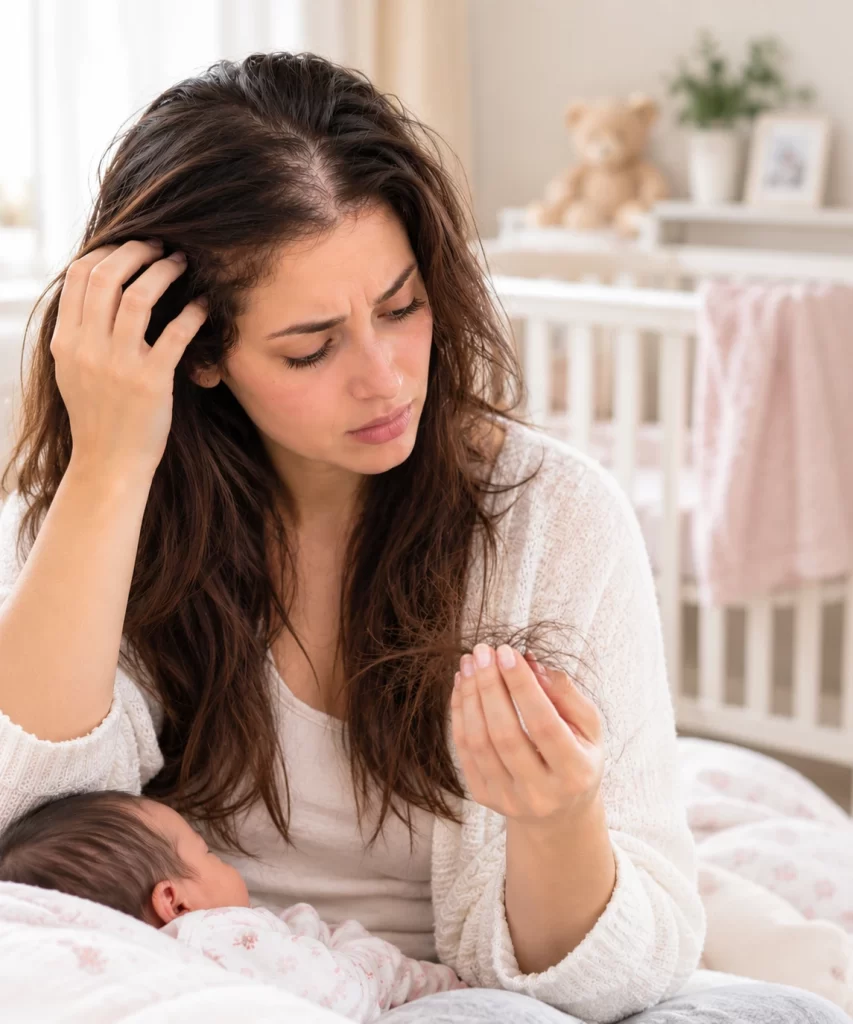
Postpartum Hair Loss: Is It Normal?

Noticing more hair than usual on your pillow, in the shower, or on your hairbrush after
giving birth can be alarming. However, increased hair shedding after pregnancy is common
and is usually temporary.
Postpartum hair loss is commonly associated with telogen effluvium, a temporary form of
diffuse hair shedding that can occur after major hormonal or physical changes.
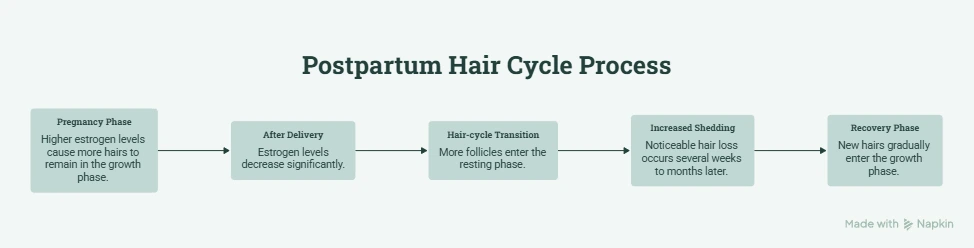
During pregnancy, higher estrogen levels keep more hairs in the active growth phase for
longer. After delivery, estrogen levels fall, and more hairs gradually enter the resting phase
of the hair cycle. The result is increased shedding that usually becomes noticeable several
weeks to a few months after childbirth.
For most women, the shedding gradually improves and hair density returns over time.
Important: Not every case of postpartum hair loss is caused by hormonal
changes alone. Persistent shedding, progressive thinning, or patchy hair loss may
require medical assessment to identify other contributing factors.

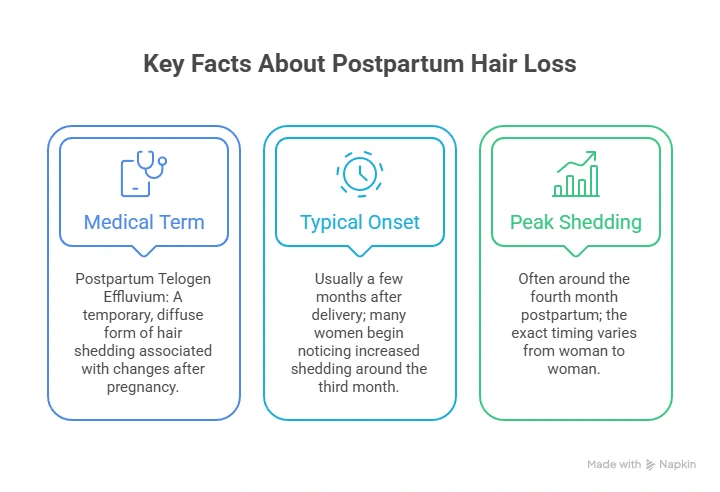
Key Facts About Postpartum Hair Loss

How Is It Evaluated?
Clinical assessment ± scalp trichoscopy
The doctor may use scalp examination and trichoscopy to evaluate the pattern of hair loss
and look for other causes.
Are Blood Tests Always Needed?
Not necessarily
Blood tests may be recommended when the medical history or examination suggests
nutritional deficiencies, thyroid problems, anemia, or another contributing condition.
Is It Permanent?
Usually not
Postpartum shedding is generally temporary, and hair growth gradually returns as the hair
cycle normalizes.
When Should You Seek Medical Advice?
If shedding is prolonged, severe, progressive, or associated with other symptoms
Persistent hair loss may indicate another condition that needs evaluation.

What Causes Postpartum Hair Loss?

Hair naturally moves through a continuous growth cycle consisting of three main phases:
1. Anagen – Growth Phase
This is the active growth stage of the hair follicle. Most scalp hairs are normally in this
phase.
2. Catagen – Transition Phase
During this short phase, the follicle gradually reduces its growth activity.
3. Telogen – Resting Phase
The hair follicle enters a resting period before the old hair is released and eventually
replaced by a new growing hair.
During pregnancy, hormonal changes—particularly increased estrogen—keep more hairs
in the growth phase and reduce normal shedding.
After childbirth, estrogen levels decline. As the hair cycle adjusts, a larger number of hairs
move into the resting phase. The hairs do not necessarily fall out immediately; shedding
becomes noticeable later, which explains why postpartum hair loss often appears months
after delivery rather than immediately after childbirth.

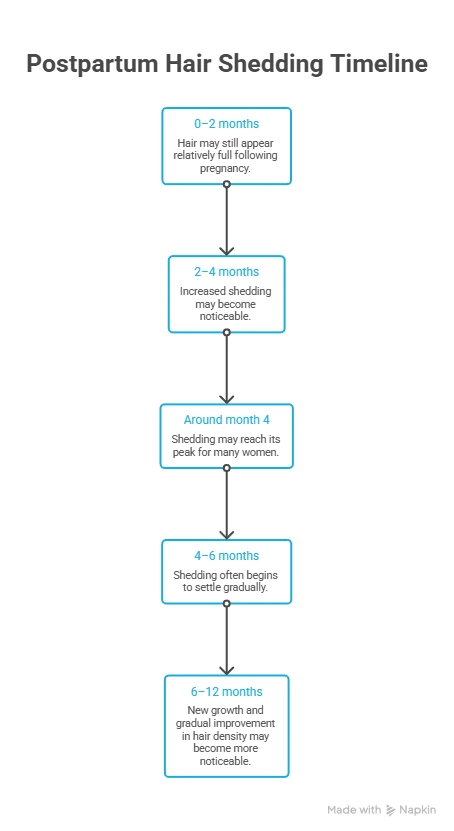
The Postpartum Hair Cycle Explained

When Does Postpartum Hair Loss Start?

The timing varies, but a common pattern is:

Postpartum hair shedding commonly begins around three months after delivery and is
usually temporary. Cleveland Clinic notes that the shedding may last several months,
while hair fullness generally returns by around the baby’s first birthday for most people.
Individual recovery can vary.

Is Postpartum Hair Loss Always Just Hormonal?

No.
Although hormonal changes are a major factor, other conditions can contribute to hair
shedding or make recovery take longer.
Possible contributing factors include:
• Iron deficiency or anemia.
• Thyroid disorders.
• Inadequate nutritional intake.
• Significant physical or emotional stress.
• Rapid weight loss or restrictive dieting.
• Female pattern hair loss.
• Certain medications.
• Scalp disorders or inflammation.
For this reason, persistent or unusual hair loss should not automatically be attributed to
postpartum hormonal changes.

Frequently Asked Questions

Q1: Is postpartum hair loss permanent?
A: Usually, no.
Postpartum telogen effluvium is generally temporary. As the hair cycle normalizes, new
hair growth gradually replaces the hairs that have been shed. Most women eventually
regain much of their previous hair fullness.
Q2: When does postpartum hair loss usually start?
A: It commonly becomes noticeable a few months after childbirth. Many women notice
increased shedding around the third month, with shedding often reaching its peak around
the fourth month.
Q3: How long does postpartum hair shedding last?
A: The active shedding phase often lasts several months. Hair density then gradually
improves as new growth develops. Many women notice substantial recovery during the
first postpartum year.
Q4: Will biotin stop postpartum hair loss?
A: Not necessarily.
Postpartum telogen effluvium is primarily related to changes in the hair-growth cycle
following pregnancy. Biotin supplementation is not a universal treatment for postpartum
shedding, particularly when there is no documented deficiency.
Q5: Do I need blood tests?
A: Not necessarily.
Many cases of telogen effluvium can be assessed clinically. Blood tests may be
recommended when the doctor suspects contributing factors such as iron deficiency,
anemia, thyroid disease, or another nutritional or medical issue.
Q6: Can trichoscopy diagnose postpartum hair loss?
A: Trichoscopy can be a useful tool for examining the scalp and hair shafts and distinguishing
between different patterns of hair loss. However, diagnosis should consider the clinical
history and physical examination as well.
Q7: Can I use hair-loss medication while breastfeeding?
A: Do not start hair-loss medication during breastfeeding without discussing it with your
healthcare provider. Some hair-loss medications are not recommended during
breastfeeding, so the specific treatment must be reviewed individually.
Q8: Does every woman experience postpartum hair loss?
A: Postpartum shedding is very common, but the degree of shedding varies considerably
between women. Some notice only a mild increase in hair fall, while others experience
much more noticeable shedding

“Have you ever heard about the right and left hemispheres of the brain?”

Left Hemisphere:

  • Responsible for logic and analysis.
  • Focuses on language, speech, and writing.
  • Good at mathematics and solving problems step by step.

Right Hemisphere:

  • Responsible for creativity and imagination.
  • Focuses on art, music, and the ability to recognize faces.
  • Helps us perceive the big picture and emotions.

So does that mean a person uses only half of their brain? Of course not. No one functions with just half a brain.
The proof is simple: when you listen to a song, you understand the lyrics, feel the emotions, and enjoy the melody all at the same time.

This perfect coordination shows that both hemispheres are always working together.

But here comes the real question

What happens when this balance is disrupted?

In today’s fast-paced world, constant notifications, multitasking, and mental overload force the brain to switch rapidly between tasks. Instead of working in harmony, the brain becomes overstimulated, leading to poor focus, mental fatigue, and difficulty completing even simple tasks.

“It may sound strange, but using your other hand can be both fun and beneficial at the same time.”

I heard an unusual piece of information that says

Training the non-dominant hand can be an effective way to stimulate the brain and enhance motor skills.Using your non-dominant hand also helps you express your emotions more deeply, as it allows you to think about them more clearly.

This information is actually strange, because we often want to try something new to stimulate our brains, but most activities turn out to be difficult and complicated.
So most of the time, we end up doing nothing, even though something as simple as using the hand we’re not used to can be new, useful, and even funny. For example, I have good handwriting, but when I try to write with my other hand, the handwriting definitely looks strange.

So, what exactly does this benefit us in?

1-It helps improve communication and coordination between the two hemispheres of the brain.

2-It contributes to enhancing brain flexibility and adaptability.

3-It helps improve fine motor skills and better control of movements.

For me, the most important thing is to improve focus, so I will definitely try something like this. There are also advanced and modern solutions for focus called  IV drip.

So, what steps can I start with?

There are 3 levels if you want to take this as a personal challenge.

Beginner Level:

  • Writing: Start by writing a few sentences daily with your non-dominant hand.

  • Brushing Teeth: Try brushing your teeth with your non-dominant hand.

  • Grabbing Objects: Practice picking up objects of different sizes using your non-dominant hand.

Intermediate Level:

  • Drawing: Draw simple shapes with your non-dominant hand.

  • Using a Computer Mouse: Use the mouse with your non-dominant hand.

  • Peeling Fruits and Vegetables: Try peeling them with your non-dominant hand.

Advanced Level:

  • Cooking: Chop vegetables and try cooking tasks with your non-dominant hand.

  • Sports: Perform some exercises using your non-dominant hand.

  • Playing a Musical Instrument: Try playing an instrument with your non-dominant hand.

Share with us if you’re excited to start the challenge and try something new, fun, and beneficial at the same time.

“Connect with the Earth: The Secret to Calmness and Natural Energy”

Have you ever heard of the term Grounding?

Alright, let’s find out what it is.

Grounding  ?
Grounding (Grounding or Earthing) is the direct contact between the body and the natural earth to absorb its electrons, balancing the body’s electrical charges through barefoot walking or using conductive tools.

ok, how do i do that?

Methods

 Includes walking barefoot on grass or sand, sitting/lying on the ground, or using grounding mats connected to grounded outlets to achieve a similar effect.

Ok , why could something like this start to spread and become known? It might be because it has benefits such as…

  • Reducing cortisol and improving mood and sleep.
  • Relieving inflammation and pain by neutralizing free radicals.
  • Enhancing circulation and reducing fatigue.


In my opinion, we are very similar to nature, and that’s why when we connect with it, we feel calm and at ease. I’ve seen some images that show how we resemble nature, even in our eyes when we cry.

Or our hair, in its natural state, resembles wood or forests.

Or even our scars, which resemble the cracks in wood, and by the way, they now have a solution with the tissue bioengineering technology.

And the traces of tears on our cheeks resemble rivers.

Indeed, some simple habits can have a soothing effect on us and bring us closer to ourselves.

“Eikadouli”

“Eikadouli”?! This ancient Nubian word means “I love you” – strange yet utterly unique. The feeling is magical when said by someone you truly love, and who’s perfectly right for you! 

After saying “Eikadouli” in any language, a wave of joy follows! We can’t deny that this happiness comes with responsibility, but it’s a beautiful joy and a wonderful responsibility. 

Joys like: his proposal for your engagement, then the engagement party, followed by the henna night, and finally the wedding! Every step is unforgettable joy.

One interesting fact I loved is the reason the ring is worn on the left-hand ring finger: a vein runs directly to the heart, symbolizing that this person holds a special place in your heart. 

Despite all this happiness, preparing for these occasions can be challenging for us as girls, because we care about looking our best in terms of outfits, self-care, and hair.

For the first events, they are usually less stressful compared to wedding preparations. On the wedding day, it is the most important day of our lives, so we focus heavily on self-care. 

Amid all the stress and planning of beautiful, emotional moments, we sometimes lose the ability to truly enjoy them and forget the real joy. That’s why one of the best things modern developments offer is places and platforms that help you create a routine that suits you, allowing you to experience these moments with more joy and care. My advice is to fully enjoy them, as these precious moments won’t come again, and I hope they turn out as wonderful as you’ve always imagined

I believe that sleep is one of the most beautiful moments for most people.

 After a long day, the thing you most want to do is sleep. But sometimes, even when you’re exhausted, sleep isn’t as good as you’d like. You might be well-covered or wear warm clothes, yet still not sleep well.

 Did you know there’s a strange habit or tip that can improve your sleep quality? What is it?

Sleep Secret: Slightly Cool Room (15-19°C)

Why exactly this range?
Your body needs to drop its core temperature by 0.5-1°C to start natural sleep. A moderately cool room (15-19°C) helps your body shed heat efficiently, sending the signal “Time to sleep!” to your biological clock.

What actually happens in your body:

 ✅ Deeper sleep: Up to 30% more slow-wave deep sleep, responsible for tissue repair and memory enhancement.
✅ Better fat burning: Mild activation of brown adipose tissue (BAT) to generate heat, burning ~50 extra calories overnight.
✅ Growth hormone: Secreted at all life stages (though quantity and role vary by age), released in larger amounts during slow-wave deep sleep, and moderate coolness increases the depth of this phase.

It is also possible

  • 🔹 Crack a window slightly (if possible) for ventilation + cooling
  • 🔹 Use a light cotton sheet + removable blanket
  • 🔹 Light cotton socks if feet get cold (improves blood flow)
  • ❌ Avoid heavy pajamas or electric blankets (they raise body temperature)

Remember that we are in the winter season, so the environment should not be too cold to avoid fatigue or catching a cold. What is meant here is to keep the atmosphere comfortable and gentle for you.

In the end, I wish you a restful sleep and sweet dreams.