Post-Pregnancy Melasma: Why Does ItAppear and How Can It Be Managed?

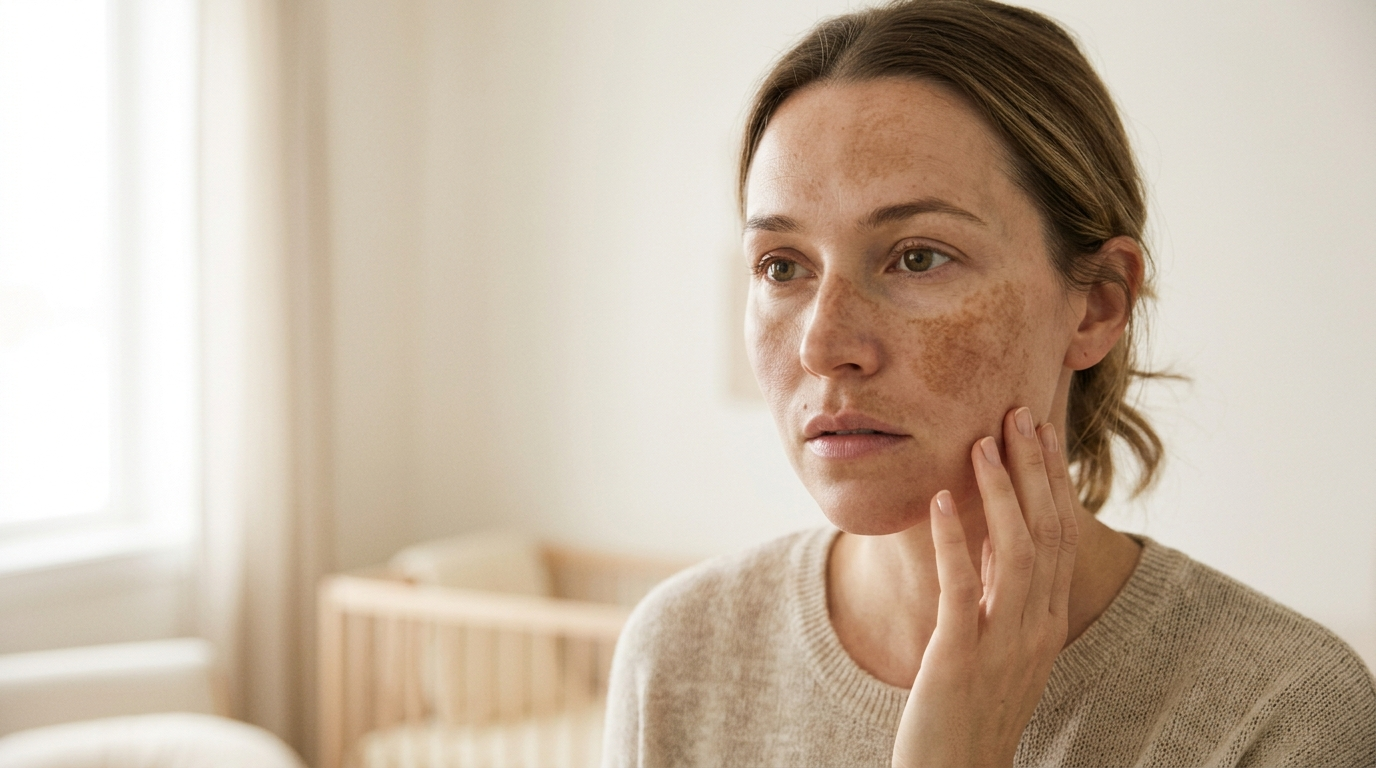
Have you noticed dark patches appearing on your cheeks, forehead, or upper lip during or after pregnancy?
Melasma is a common form of acquired hyperpigmentation that often appears as symmetrical brown or grayish patches on the face. Hormonal changes, including those that occur during pregnancy, can contribute to melasma, while sun and light exposure, genetics, and skin type may
also play a role.
The important thing to know is that melasma can often be improved, but it may return.
Managing it usually requires more than a single brightening treatment it involves identifying triggers, choosing an appropriate treatment plan, and maintaining the results over time.

5 Things You Should Know About Post-Pregnancy Melasma

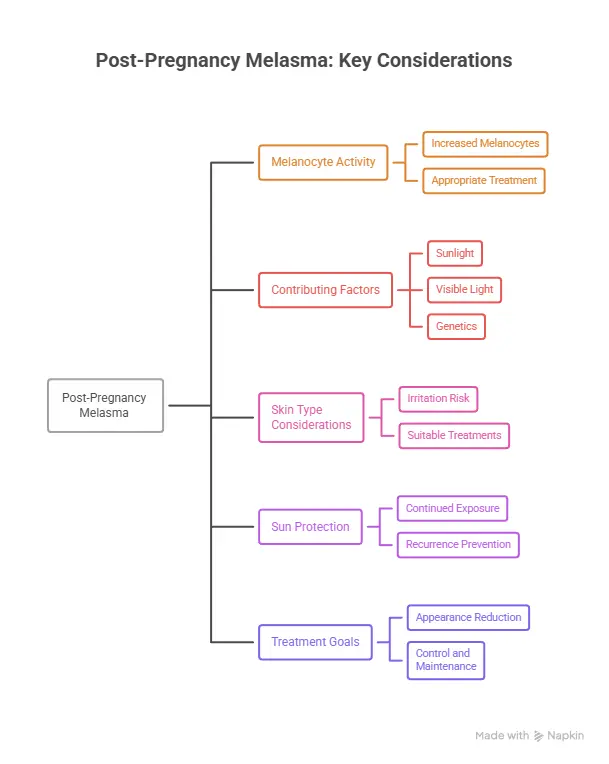
1. Melasma is not simply a superficial dark spot.
It can involve increased activity of melanocytes, the cells responsible for producing melanin, so
treatment needs to address pigmentation appropriately.
2. Hormones are not the only factor.
Pregnancy can trigger melasma, but sunlight, visible light, genetics, and other factors may also
contribute.
3. Darker skin types may require extra care.
Irritation from an overly aggressive or unsuitable treatment may increase pigmentation in some people.
4. Sun protection is part of treatment.
Even after pigmentation improves, continued exposure to sunlight and light may contribute to recurrence.
5. The goal is not always permanent removal.
A more realistic goal is to reduce the appearance of melasma, control it, and maintain
improvement for as long as possible.

What Exactly Is Melasma?

Melasma is an acquired disorder of skin pigmentation.
It usually appears as symmetrical dark patches on areas of the face such as:
• The cheeks
• The forehead
• The upper lip
• The nose
• Other facial areas
It develops when melanocytes become more active and produce increased amounts of melanin.
But why does this happen?
Melasma usually does not have just one cause.
Several factors may interact, including:
Hormonal changes + sun and light exposure + genetic predisposition + skin type.

Why Does Melasma Appear During Pregnancy?

Pregnancy causes significant hormonal changes in the body.
These changes may affect melanocyte activity, which is why some women notice new dark
patches or increased pigmentation during pregnancy.
This is why melasma is sometimes called the “pregnancy mask.”
After delivery, pigmentation may gradually become less noticeable in some women.
However, melasma can persist in others, particularly when triggers such as sun exposure remain present or when there is an underlying predisposition to pigmentation

Is Every Dark Spot After Pregnancy Melasma?

No.
This is an important distinction.
Not every dark patch that appears after pregnancy is necessarily melasma.
Other forms of pigmentation can occur following inflammation, acne, skin irritation, or other causes.
That is why appropriate treatment starts with identifying the type of pigmentation first.
This matters because a treatment that is suitable for one type of pigmentation may not be
appropriate for another

Why Can Melasma Be Difficult to Treat?

Melasma can be a recurring condition.
The pigmentation may improve for a period of time and then become more noticeable again.
This does not necessarily mean that treatment has “failed.”
New or ongoing triggers may contribute to recurrence, including:
• Sun exposure.
• Light exposure.
• Hormonal changes.
• Skin irritation.
• Inconsistent home care.
• Using unsuitable skincare products.
For this reason, melasma often requires long-term management, rather than focusing only on short-term skin brightening.

Frequently Asked Questions About Post- Pregnancy Melasma and Cosmelan

Q1:Does Pregnancy Melasma Go Away After Delivery?
A: It may improve in some women, but it can persist in others. Hormonal changes, sun
exposure, skin type, and other factors can influence how long the pigmentation remains.
Q2: Does Cosmelan Permanently Remove Melasma?
A: Permanent removal cannot be guaranteed. Treatment may improve the appearance of
pigmentation in some patients, but recurrence remains possible.
Q3:Can Cosmelan Be Used on Darker Skin?
A: It may be appropriate for some patients, but careful assessment and protocol selection are important. The goal is to improve pigmentation while minimizing unnecessary irritation.
Q4:Can Melasma Be Treated While Breastfeeding?
A: It depends on the ingredients included in the treatment protocol. The professional and home- care products should be reviewed with a physician before treatment begins.
Q5:Can I Wear Makeup After Treatment?
A: It depends on your skin condition and your physician’s instructions. If the skin is irritated or peeling, you may be advised to avoid certain products until the skin barrier has recovered.
Q6: Do I Still Need Sunscreen After Melasma Improves?
A: Yes. Sun protection remains important even after pigmentation improves. Environmental triggers can contribute to recurrence.
Q7: Does Every Dark Facial Spot Need Cosmelan?
A: No. Treatment should depend on identifying the type and cause of pigmentation first, followed by selection of the appropriate treatment plan

The Bottom Line: Managing Melasma Starts With Understanding the Cause

Post-pregnancy melasma can be associated with hormonal changes, but it is not simply a
hormonal condition.
Sun exposure, visible light, skin type, genetic predisposition, and skin irritation can all
influence pigmentation and its recurrence.
That is why the best starting point is not necessarily searching for the “strongest brightening
cream” or the “fastest treatment.”
It is understanding the pigmentation, assessing the skin, and building an appropriate
treatment and maintenance plan.
At Everlast Wellness Medical Center in Abu Dhabi, pigmentation treatment begins with an
assessment of the skin and the nature of the concern before an appropriate protocol is selected.
The goal is not simply to make the skin look lighter, but to develop a thoughtful approach to managing pigmentation while supporting the skin barrier and reducing factors that may
contribute to recurrence.
Individual results may vary. Consultation required.
Understanding Postpartum Hair Loss: Causes, Timeline & Treatment Options

Postpartum Hair Loss: Is It Normal?

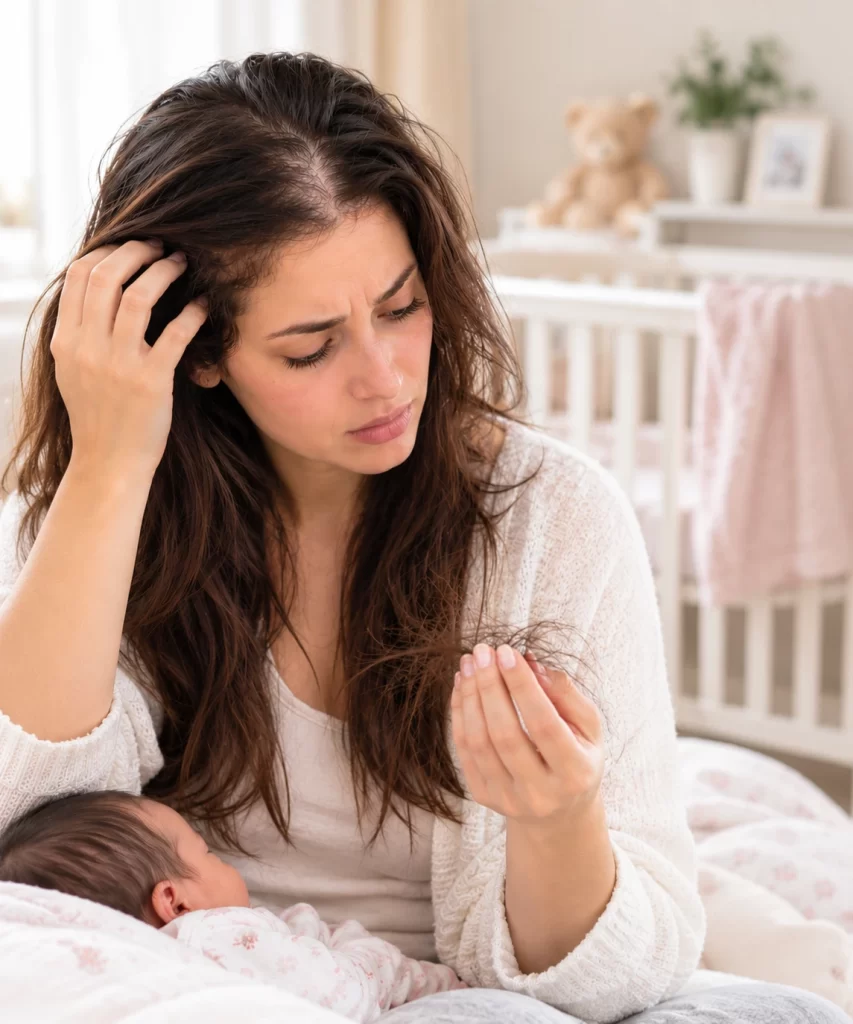
Noticing more hair than usual on your pillow, in the shower, or on your hairbrush after
giving birth can be alarming. However, increased hair shedding after pregnancy is common
and is usually temporary.
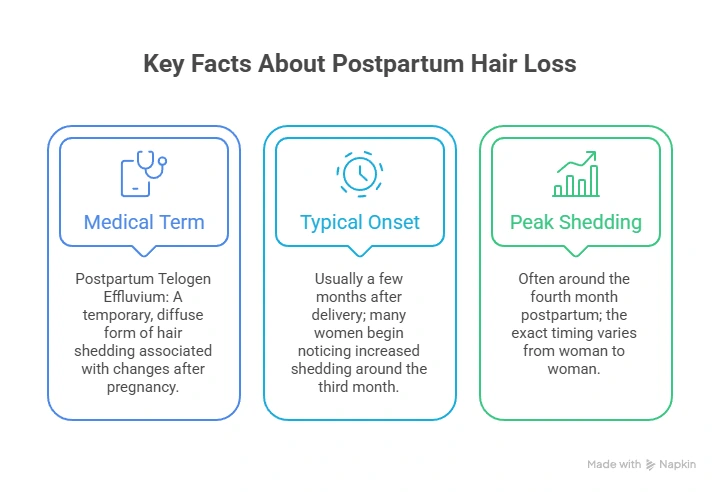
Postpartum hair loss is commonly associated with telogen effluvium, a temporary form of
diffuse hair shedding that can occur after major hormonal or physical changes.
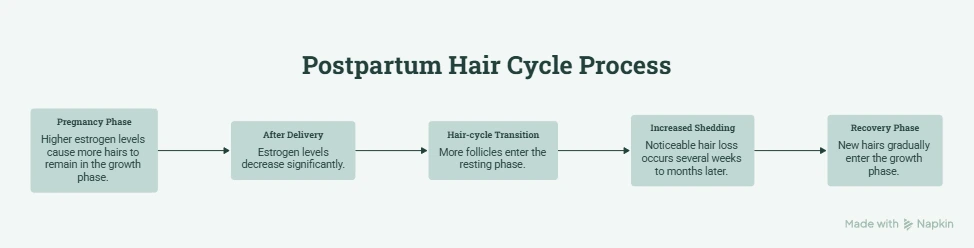
During pregnancy, higher estrogen levels keep more hairs in the active growth phase for
longer. After delivery, estrogen levels fall, and more hairs gradually enter the resting phase
of the hair cycle. The result is increased shedding that usually becomes noticeable several
weeks to a few months after childbirth.
For most women, the shedding gradually improves and hair density returns over time.
Important: Not every case of postpartum hair loss is caused by hormonal
changes alone. Persistent shedding, progressive thinning, or patchy hair loss may
require medical assessment to identify other contributing factors.

Key Facts About Postpartum Hair Loss

How Is It Evaluated?
Clinical assessment ± scalp trichoscopy
The doctor may use scalp examination and trichoscopy to evaluate the pattern of hair loss
and look for other causes.
Are Blood Tests Always Needed?
Not necessarily
Blood tests may be recommended when the medical history or examination suggests
nutritional deficiencies, thyroid problems, anemia, or another contributing condition.
Is It Permanent?
Usually not
Postpartum shedding is generally temporary, and hair growth gradually returns as the hair
cycle normalizes.
When Should You Seek Medical Advice?
If shedding is prolonged, severe, progressive, or associated with other symptoms
Persistent hair loss may indicate another condition that needs evaluation.

What Causes Postpartum Hair Loss?

Hair naturally moves through a continuous growth cycle consisting of three main phases:
1. Anagen – Growth Phase
This is the active growth stage of the hair follicle. Most scalp hairs are normally in this
phase.
2. Catagen – Transition Phase
During this short phase, the follicle gradually reduces its growth activity.
3. Telogen – Resting Phase
The hair follicle enters a resting period before the old hair is released and eventually
replaced by a new growing hair.
During pregnancy, hormonal changes—particularly increased estrogen—keep more hairs
in the growth phase and reduce normal shedding.
After childbirth, estrogen levels decline. As the hair cycle adjusts, a larger number of hairs
move into the resting phase. The hairs do not necessarily fall out immediately; shedding
becomes noticeable later, which explains why postpartum hair loss often appears months
after delivery rather than immediately after childbirth.

The Postpartum Hair Cycle Explained

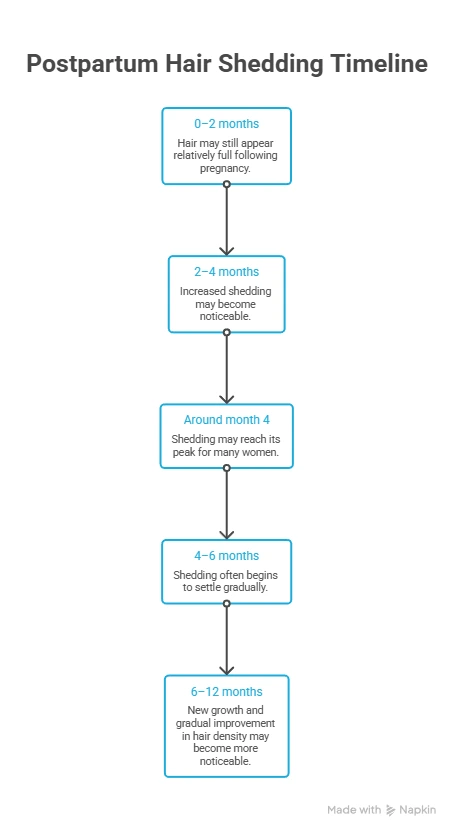
When Does Postpartum Hair Loss Start?

The timing varies, but a common pattern is:

Postpartum hair shedding commonly begins around three months after delivery and is
usually temporary. Cleveland Clinic notes that the shedding may last several months,
while hair fullness generally returns by around the baby’s first birthday for most people.
Individual recovery can vary.

Is Postpartum Hair Loss Always Just Hormonal?

No.
Although hormonal changes are a major factor, other conditions can contribute to hair
shedding or make recovery take longer.
Possible contributing factors include:
• Iron deficiency or anemia.
• Thyroid disorders.
• Inadequate nutritional intake.
• Significant physical or emotional stress.
• Rapid weight loss or restrictive dieting.
• Female pattern hair loss.
• Certain medications.
• Scalp disorders or inflammation.
For this reason, persistent or unusual hair loss should not automatically be attributed to
postpartum hormonal changes.

Frequently Asked Questions

Q1: Is postpartum hair loss permanent?
A: Usually, no.
Postpartum telogen effluvium is generally temporary. As the hair cycle normalizes, new
hair growth gradually replaces the hairs that have been shed. Most women eventually
regain much of their previous hair fullness.
Q2: When does postpartum hair loss usually start?
A: It commonly becomes noticeable a few months after childbirth. Many women notice
increased shedding around the third month, with shedding often reaching its peak around
the fourth month.
Q3: How long does postpartum hair shedding last?
A: The active shedding phase often lasts several months. Hair density then gradually
improves as new growth develops. Many women notice substantial recovery during the
first postpartum year.
Q4: Will biotin stop postpartum hair loss?
A: Not necessarily.
Postpartum telogen effluvium is primarily related to changes in the hair-growth cycle
following pregnancy. Biotin supplementation is not a universal treatment for postpartum
shedding, particularly when there is no documented deficiency.
Q5: Do I need blood tests?
A: Not necessarily.
Many cases of telogen effluvium can be assessed clinically. Blood tests may be
recommended when the doctor suspects contributing factors such as iron deficiency,
anemia, thyroid disease, or another nutritional or medical issue.
Q6: Can trichoscopy diagnose postpartum hair loss?
A: Trichoscopy can be a useful tool for examining the scalp and hair shafts and distinguishing
between different patterns of hair loss. However, diagnosis should consider the clinical
history and physical examination as well.
Q7: Can I use hair-loss medication while breastfeeding?
A: Do not start hair-loss medication during breastfeeding without discussing it with your
healthcare provider. Some hair-loss medications are not recommended during
breastfeeding, so the specific treatment must be reviewed individually.
Q8: Does every woman experience postpartum hair loss?
A: Postpartum shedding is very common, but the degree of shedding varies considerably
between women. Some notice only a mild increase in hair fall, while others experience
much more noticeable shedding

“Have you ever heard about the right and left hemispheres of the brain?”

Left Hemisphere:

  • Responsible for logic and analysis.
  • Focuses on language, speech, and writing.
  • Good at mathematics and solving problems step by step.

Right Hemisphere:

  • Responsible for creativity and imagination.
  • Focuses on art, music, and the ability to recognize faces.
  • Helps us perceive the big picture and emotions.

So does that mean a person uses only half of their brain? Of course not. No one functions with just half a brain.
The proof is simple: when you listen to a song, you understand the lyrics, feel the emotions, and enjoy the melody all at the same time.

This perfect coordination shows that both hemispheres are always working together.

But here comes the real question

What happens when this balance is disrupted?

In today’s fast-paced world, constant notifications, multitasking, and mental overload force the brain to switch rapidly between tasks. Instead of working in harmony, the brain becomes overstimulated, leading to poor focus, mental fatigue, and difficulty completing even simple tasks.

“It may sound strange, but using your other hand can be both fun and beneficial at the same time.”

I heard an unusual piece of information that says

Training the non-dominant hand can be an effective way to stimulate the brain and enhance motor skills.Using your non-dominant hand also helps you express your emotions more deeply, as it allows you to think about them more clearly.

This information is actually strange, because we often want to try something new to stimulate our brains, but most activities turn out to be difficult and complicated.
So most of the time, we end up doing nothing, even though something as simple as using the hand we’re not used to can be new, useful, and even funny. For example, I have good handwriting, but when I try to write with my other hand, the handwriting definitely looks strange.

So, what exactly does this benefit us in?

1-It helps improve communication and coordination between the two hemispheres of the brain.

2-It contributes to enhancing brain flexibility and adaptability.

3-It helps improve fine motor skills and better control of movements.

For me, the most important thing is to improve focus, so I will definitely try something like this. There are also advanced and modern solutions for focus called  IV drip.

So, what steps can I start with?

There are 3 levels if you want to take this as a personal challenge.

Beginner Level:

  • Writing: Start by writing a few sentences daily with your non-dominant hand.

  • Brushing Teeth: Try brushing your teeth with your non-dominant hand.

  • Grabbing Objects: Practice picking up objects of different sizes using your non-dominant hand.

Intermediate Level:

  • Drawing: Draw simple shapes with your non-dominant hand.

  • Using a Computer Mouse: Use the mouse with your non-dominant hand.

  • Peeling Fruits and Vegetables: Try peeling them with your non-dominant hand.

Advanced Level:

  • Cooking: Chop vegetables and try cooking tasks with your non-dominant hand.

  • Sports: Perform some exercises using your non-dominant hand.

  • Playing a Musical Instrument: Try playing an instrument with your non-dominant hand.

Share with us if you’re excited to start the challenge and try something new, fun, and beneficial at the same time.

“Connect with the Earth: The Secret to Calmness and Natural Energy”

Have you ever heard of the term Grounding?

Alright, let’s find out what it is.

Grounding  ?
Grounding (Grounding or Earthing) is the direct contact between the body and the natural earth to absorb its electrons, balancing the body’s electrical charges through barefoot walking or using conductive tools.

ok, how do i do that?

Methods

 Includes walking barefoot on grass or sand, sitting/lying on the ground, or using grounding mats connected to grounded outlets to achieve a similar effect.

Ok , why could something like this start to spread and become known? It might be because it has benefits such as…

  • Reducing cortisol and improving mood and sleep.
  • Relieving inflammation and pain by neutralizing free radicals.
  • Enhancing circulation and reducing fatigue.


In my opinion, we are very similar to nature, and that’s why when we connect with it, we feel calm and at ease. I’ve seen some images that show how we resemble nature, even in our eyes when we cry.

Or our hair, in its natural state, resembles wood or forests.

Or even our scars, which resemble the cracks in wood, and by the way, they now have a solution with the tissue bioengineering technology.

And the traces of tears on our cheeks resemble rivers.

Indeed, some simple habits can have a soothing effect on us and bring us closer to ourselves.

“Eikadouli”

“Eikadouli”?! This ancient Nubian word means “I love you” – strange yet utterly unique. The feeling is magical when said by someone you truly love, and who’s perfectly right for you! 

After saying “Eikadouli” in any language, a wave of joy follows! We can’t deny that this happiness comes with responsibility, but it’s a beautiful joy and a wonderful responsibility. 

Joys like: his proposal for your engagement, then the engagement party, followed by the henna night, and finally the wedding! Every step is unforgettable joy.

One interesting fact I loved is the reason the ring is worn on the left-hand ring finger: a vein runs directly to the heart, symbolizing that this person holds a special place in your heart. 

Despite all this happiness, preparing for these occasions can be challenging for us as girls, because we care about looking our best in terms of outfits, self-care, and hair.

For the first events, they are usually less stressful compared to wedding preparations. On the wedding day, it is the most important day of our lives, so we focus heavily on self-care. 

Amid all the stress and planning of beautiful, emotional moments, we sometimes lose the ability to truly enjoy them and forget the real joy. That’s why one of the best things modern developments offer is places and platforms that help you create a routine that suits you, allowing you to experience these moments with more joy and care. My advice is to fully enjoy them, as these precious moments won’t come again, and I hope they turn out as wonderful as you’ve always imagined

I believe that sleep is one of the most beautiful moments for most people.

 After a long day, the thing you most want to do is sleep. But sometimes, even when you’re exhausted, sleep isn’t as good as you’d like. You might be well-covered or wear warm clothes, yet still not sleep well.

 Did you know there’s a strange habit or tip that can improve your sleep quality? What is it?

Sleep Secret: Slightly Cool Room (15-19°C)

Why exactly this range?
Your body needs to drop its core temperature by 0.5-1°C to start natural sleep. A moderately cool room (15-19°C) helps your body shed heat efficiently, sending the signal “Time to sleep!” to your biological clock.

What actually happens in your body:

 ✅ Deeper sleep: Up to 30% more slow-wave deep sleep, responsible for tissue repair and memory enhancement.
✅ Better fat burning: Mild activation of brown adipose tissue (BAT) to generate heat, burning ~50 extra calories overnight.
✅ Growth hormone: Secreted at all life stages (though quantity and role vary by age), released in larger amounts during slow-wave deep sleep, and moderate coolness increases the depth of this phase.

It is also possible

  • 🔹 Crack a window slightly (if possible) for ventilation + cooling
  • 🔹 Use a light cotton sheet + removable blanket
  • 🔹 Light cotton socks if feet get cold (improves blood flow)
  • ❌ Avoid heavy pajamas or electric blankets (they raise body temperature)

Remember that we are in the winter season, so the environment should not be too cold to avoid fatigue or catching a cold. What is meant here is to keep the atmosphere comfortable and gentle for you.

In the end, I wish you a restful sleep and sweet dreams.

“Your safe Guide to a Glowing Skin This New Year”

If you didn’t have enough time to buy a Christmas tree, decorate it, light things up, or even plan a trip like everyone else. That doesn’t mean that you can’t start the new year differently.
Let’s create a simple New Year routine and welcome 2026 with a real glow.

Right now, we have two options:

either we start taking care of ourselves at home from today, or we go for quick solutions that help us look and feel our best. Let’s start talking about simple, at-home solutions that help us take care of ourselves and slowly bring back that feeling of comfort and glow.
We can use the products we’re already familiar with and have at home simple and easy steps that we can actually stick to.

7-Day Skincare Routine

A simple, balanced routine suitable for most skin types (if your skin is very sensitive, avoid any step that causes irritation).

 Day 1 – Cleansing & Hydration
• Cleanser suitable for your skin type
• Toner (optional)
• Hydrating serum (Hyaluronic Acid)
• Moisturizer
• Sunscreen in the morning
Day 2 – Gentle Exfoliation
• Cleanser
• Gentle exfoliator (only once)
• Soothing or hydrating serum
• Moisturizer
Avoid harsh scrubs or over-exfoliation
Day 3 – Skin Nourishment
Morning:
• Cleanser
• Vitamin C serum
• Moisturizer
• Sunscreen
Evening:
• Cleanser
• Nourishing cream or light facial oil
Day 4 – Mask Day
• Cleanser
• Mask based on your skin’s needs:
o Hydrating mask for dry skin
o Clay mask for oily skin
• Lightweight serum
• Moisturizer
Day 5 – Eye Care
• Cleanser
• Hydrating serum
• Eye cream (gently tap around the eyes )
• Moisturizer
• Sunscreen
Day 6 – Skin Rest Day
• Cleanser only
• Moisturizer
• Sunscreen
Let your skin breathe — no heavy serums
Day 7 – Self-Care & Glow
• Cleanser
• Gentle facial massage (hands or roller)
• Your favorite serum
• Moisturizer
• Lip mask or lip balm

Important Tips:

• Drink plenty of water
• Get good sleep
• Wear sunscreen daily, regardless of the weather
• Consistency matters more than the number of products

This is for the at-home, slower solutions, but if you’re looking for faster results, we can do the following:

1 – skin booster PDRN session : This keeps the skin radiant and glowing for a long time.
2 – Meso eye session : In general, mesotherapy is suitable for multiple areas on the face and body.
3 –Meso or filler lip : Fillers and mesotherapy are great for lip care, tailored to the look you want whether you’re aiming for fullness or just enhancing the shape. In every case, they provide a beautiful and balanced result.
4- laser session : At the start of the new year, we can begin laser sessions to save time and effort compared to traditional hair removal, while achieving smoother, softer skin.

Whether you choose the slow or fast approach, always take care of yourself, as it boosts your self-confidence and improves your overall mood.

You’re not wrong if the vacation didn’t work miracles

Let’s take a break from the break!

 Sometimes during vacation, we feel like something is wrong, and we’re not fully relaxed even during our time off. The time we’ve been waiting for all week can make us feel uneasy for several reasons:

As soon as we slow down, the body and mind open the vault and release all the fatigue and pressure that builds up during work. With our high expectations for a “perfect” vacation, even small disappointments can turn into frustration instead of relaxation. Many people are also haunted by guilt just for resting, as if rest automatically means a lack of productivity.

Social pressure completes the picture: family gatherings, visits, and commitments can make a vacation feel even busier than workdays. When daily routines disappear, the mind becomes unsettled and anxiety starts to surface. Add to that social media, filled with exaggerated images of travel and happiness, and suddenly any normal vacation feels inadequate.

And even when work stops, thinking doesn’t. Problems may take a break from the office, but not from our minds. Vacation expenses, gifts, and outings can increase financial pressure instead of easing it. Then we start thinking about returning to work too early, ruining the sense of calm before we’ve even enjoyed it. In the end, many people are so used to constant work that they don’t know how to truly relax, and they feel stressed the moment they sit still.

Here are a simple-but very effective-steps to help you make a better vacation for yourself:

1.Dedicate a short daily relaxation time before the vacation, like 10 minutes of deep breathing or stretching exercises.

2.Focus on small enjoyable moments instead of perfection. Set realistic expectations: “I’ll enjoy the time without pressure; not everything has to be perfect.”

3.Remember that rest is part of productivity. Taking breaks is essential for recharging, and caring for yourself isn’t slacking.

4.Set simple boundaries. Choose only the important events, or dedicate some time for yourself away from the crowd.

5.Maintain a small routine, even if simple: regular sleep, healthy meals, or a daily activity you enjoy.

6. Reduce social media use or do a “digital detox” during the vacation. Focus on your own experience, not others’ lives.

7. Dedicate a short time for calm planning or reflection instead of trying to escape completely. Writing or talking to a friend helps release anxiety.

8. Set a simple vacation budget, choose free or low-cost activities, and focus on quality, not quantity.

9. Take the last couple of days to gradually reduce activity and organize your work priorities instead of thinking about everything at once.

10.Try different ways to relax: music, walking, meditation, a calm coffee, or an activity you love. Make rest a habit, not a rare occasion.

If you’re spending your vacation away from home, make sure to prepare your essentials in advance:

  1. Take your personal medications with you.
  2. Carry a needle and thread for any emergency.
  3. Don’t forget your skincare or beauty essentials.
  4. If you’re traveling after laser, filler, or mesotherapy sessions, be sure to bring the necessary aftercare products to use during your trip.

Always remember that this is your time, and you have the right to spend it doing what you love, not what feels obligatory. Accept that multiple things may happen at the same time, and that you will inevitably miss out on some of them—so make sure what you miss is less important, and enjoy what you are doing in the present moment.

Stability of the Emirati Family: Women, National Values, and the Role of Everlast

The family is the cornerstone of any society, and its stability is the backbone of the social fabric. In the UAE, the family is not just a social unit, but also a nurturer of values, morals, and national identity. The more stable and cohesive the family is, the more this is reflected in society, leading to generations that are conscious and proud of their Emirati identity.

Women are the heart of the family

Emirati women play a pivotal role in promoting family stability and strengthening national identity. They are not merely mothers or wives, but true leaders in their homes, instilling in their children values of respect, cooperation, and dedication, and fostering a sense of belonging and pride in Emirati culture. Stable and educated women ensure that the home is a nurturing environment for the next generation, capable of facing the challenges of the modern era.

Promoting Emirati values and social stability

Emirati values such as respect, tolerance, cooperation, and national belonging are the foundation of family and community stability. The UAE has not only established these values, but has also taken on the enormous challenge of modernizing and building cities in a spectacular and attractive way, making the UAE a leading tourist destination that reflects a progressive vision combining modernity with authentic national identity.

Everlast's role in supporting families and the next generation

This is where Everlast Wellness comes in, extending its support to the entire family. Everlast offers specialized programs and services that help children and students develop their academic and social skills, and supports women to be able to lead their families and instill Emirati values in their children through guidance, ongoing support, and health and social awareness.

Everlast Wellness also provides comprehensive medical care for all family members, with close monitoring to ensure that everyone is in the best possible health. This focus on family health promotes family stability and enables each individual to give and contribute to a cohesive and happy home environment.

Conclusion

The stability of Emirati families is the cornerstone of building a strong and cohesive society, and women are the beating heart of this stability. With Everlast Wellness’ support for families, women, and students, Emirati values are reinforced, national identity is strengthened, family health and well-being are ensured, and conscious generations are built, proud of their past, present, and bright future in the globally distinguished UAE.