Last Updated: November 4, 2026
Fat freezing, or cryolipolysis, is a non-surgical body-contouring procedure that uses controlled cooling from a dedicated device to target selected pockets of subcutaneous fat. Cooling may injure some fat cells, which the body then clears gradually. It is not a weight-loss treatment and does not guarantee the same result for every patient.
What is cryolipolysis?
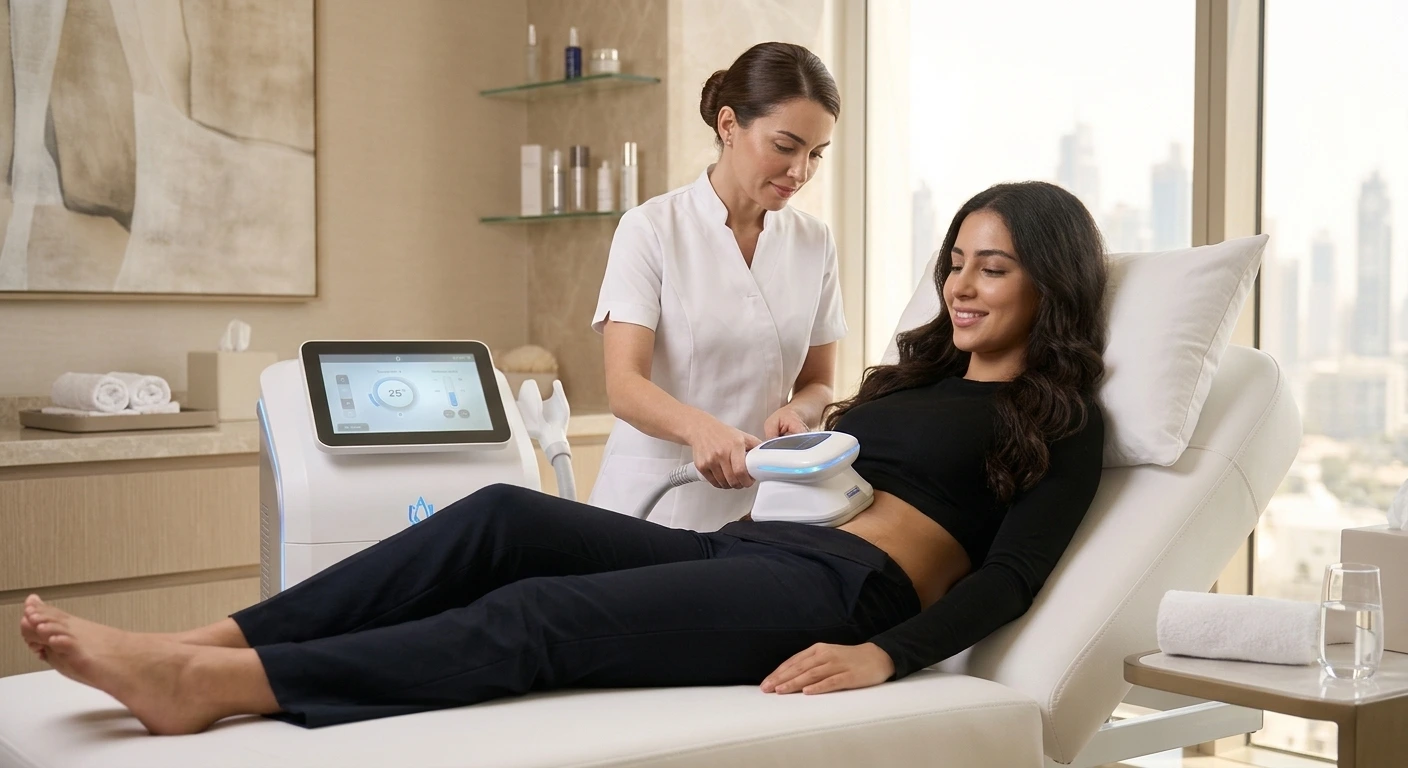
Cryolipolysis is a non-surgical body-contouring technique. A trained professional places a cooling applicator over a pinchable pocket of fat; depending on the device, the tissue may be gently drawn into the applicator. The device cools the tissue according to its specific programmed settings while protecting the skin.
The procedure may be used for selected areas such as parts of the abdomen, flanks, thighs, or under the chin, depending on the device’s authorization and the clinician’s assessment. Clearance or authorization for one device does not mean that all fat-freezing devices have identical performance or that every body area is suitable.
How does cryolipolysis work?
The intended effect is controlled cooling that may injure a portion of fat cells in the treated layer. The body then gradually processes and clears the damaged cells through normal immune and metabolic pathways. This process is not immediate, so the appearance immediately after treatment does not represent the final result.
Cooling temperature and treatment time vary by device, applicator, body area, tissue thickness, and manufacturer instructions. There is no single temperature or duration that applies to every device and patient. A fixed figure, such as −11°C, should not be presented as a universal standard for all cryolipolysis treatments.
Does fat freezing permanently remove fat cells?
The number of affected fat cells in a treated area may decrease, but this does not protect against future weight gain. Remaining fat cells can enlarge, and fat may accumulate in other areas. Maintaining a stable weight may help preserve the cosmetic result, but outcomes still vary.
What is the difference between subcutaneous and visceral fat?
Subcutaneous fat lies beneath the skin and may be pinchable enough for an applicator to target. Visceral fat is deeper inside the abdomen around internal organs and is not treated by cryolipolysis.
Higher visceral-fat levels are associated with increased metabolic and cardiovascular risk, but abdominal appearance alone cannot identify visceral fat reliably. A clinician may use measurements, imaging, or laboratory tests when appropriate. If the main cause of abdominal fullness is visceral fat, fat freezing is not the appropriate solution; the focus should be medical assessment, nutrition, activity, and treatment when indicated.
Do you need an assessment before treatment?
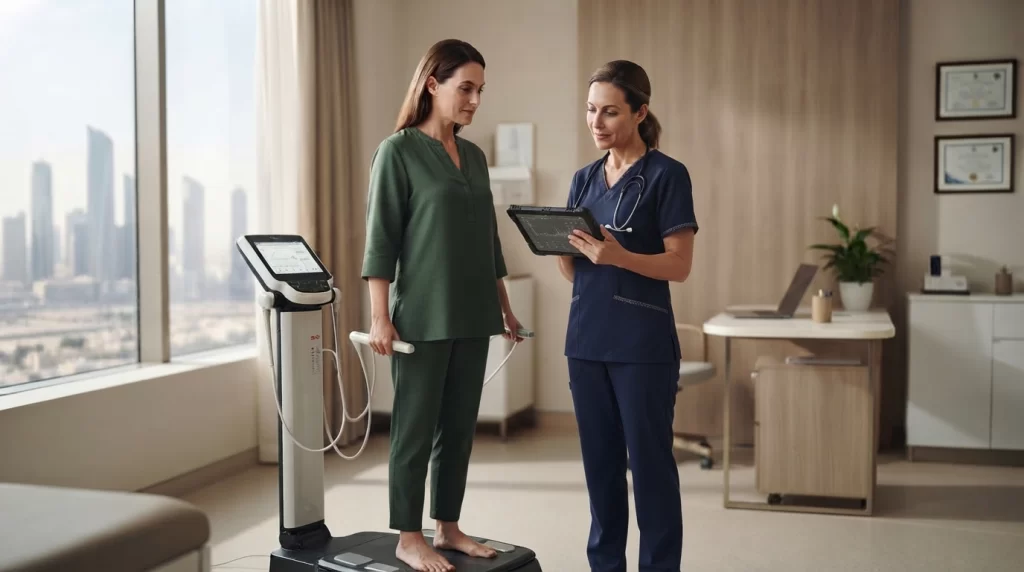
Yes. A qualified clinician should assess the area and your health history before treatment. The assessment may include:
- Goal and area review: Is the concern pinchable subcutaneous fat, loose skin, muscle separation, or something else?
- Physical examination: Assessment of the skin, fat thickness, possible hernia, pain, or swelling.
- Imaging when appropriate: Ultrasound or another suitable method may help assess the fat layer, but it does not replace clinical examination.
- Medical history: Particular attention to cold-related disorders, reduced sensation, active skin disease, pregnancy, implanted devices, and medicines.
- Alternative options: Lifestyle treatment, skin-tightening procedures, or another approach may be more appropriate depending on the cause of the contour concern.
Assessment should help determine whether treatment is suitable, not be used to pressure someone into an unnecessary procedure.
Who may be a suitable candidate?
Cryolipolysis may suit an adult who is near a stable weight, has a localized pocket of pinchable subcutaneous fat, has realistic expectations, and is not seeking treatment for obesity or major weight loss. The patient should understand that the goal is local cosmetic contouring, not a general health treatment.
People with significant loose skin and little underlying fat, or fullness caused by a hernia, muscle separation, or visceral fat, may not benefit. New or unexplained symptoms should be medically assessed rather than treated as a cosmetic concern.
Who should avoid or postpone treatment?
Contraindications vary by device and medical history, but tell the clinician before treatment if you have:
- A cold-related disorder, including certain conditions involving cold-sensitive blood proteins.
- Reduced sensation or neuropathy in the treatment area.
- An open wound, active infection, or active skin disease at the site.
- A hernia or a painful lump near the proposed treatment area.
- Pregnancy or recent childbirth until a clinician confirms that assessment and treatment are appropriate.
- A medical or medication history that may increase bruising or affect skin healing.
This list is general guidance, not a diagnosis. The final decision requires a medical history, examination, and review of the specific device protocol.
What happens during a session?
The process varies by clinic and device but commonly includes:
- Planning: The clinician identifies the area and may take photographs or measurements with consent.
- Protection: A device-specific protective membrane or pad is placed between the applicator and the skin.
- Cooling: The applicator remains in place for the programmed time. Patients may feel pulling, cold, pressure, and temporary numbness.
- After applicator removal: Redness, firmness, or swelling may occur. A brief massage may be used according to the clinic’s protocol.
- Aftercare guidance: The clinician explains expected symptoms, follow-up, and warning signs.
What results can you expect?
Results develop gradually and may take several weeks or months to assess. The treated area may look less prominent, but the amount of change cannot be guaranteed in advance. Factors include fat thickness, body area, device type, number of sessions, individual response, and weight stability.
Clinical studies report variable reductions in treated fat layers. Study averages should not be presented as an individual promise. A cryolipolysis result also does not measure total body-weight change.
Frequently asked questions
No. It is a localized contouring procedure for selected subcutaneous fat pockets, not a treatment for obesity or a substitute for healthy weight management. The treated area may change without a major change on the scale.
Some fat cells in the treated area may be reduced, but the result does not prevent future weight gain. Remaining cells can enlarge and other areas can change. Stable weight may help maintain the appearance, but it does not guarantee a lifelong result.
There is no universal number. It depends on the area, fat thickness, device, goal, and response. A clinician should decide whether another session is appropriate only after enough time has passed to assess the initial result.
Patients may feel cold, pulling, pressure, numbness, or soreness. The experience varies by body area, device, and individual tolerance, so it should not be described as pain-free for everyone.
It may be possible for selected patients after medical assessment. Abdominal fullness can result from loose skin, muscle separation, a hernia, visceral fat, or subcutaneous fat. These causes should be assessed first, especially during pregnancy, breastfeeding, or early postpartum recovery.
PAH means paradoxical adipose hyperplasia: the treated fat grows rather than shrinks. It is rare but recognized, and patients should be informed before consenting. A growing lump after treatment should be assessed by a qualified clinician.
Conclusion
Cryolipolysis may help reduce selected superficial fat pockets in carefully assessed patients, but it is not an obesity treatment and does not guarantee a permanent or risk-free result. A sound decision starts with medical assessment of the contour concern, device suitability, alternatives, realistic expectations, and potential complications.