
Last Updated: November 2, 2026
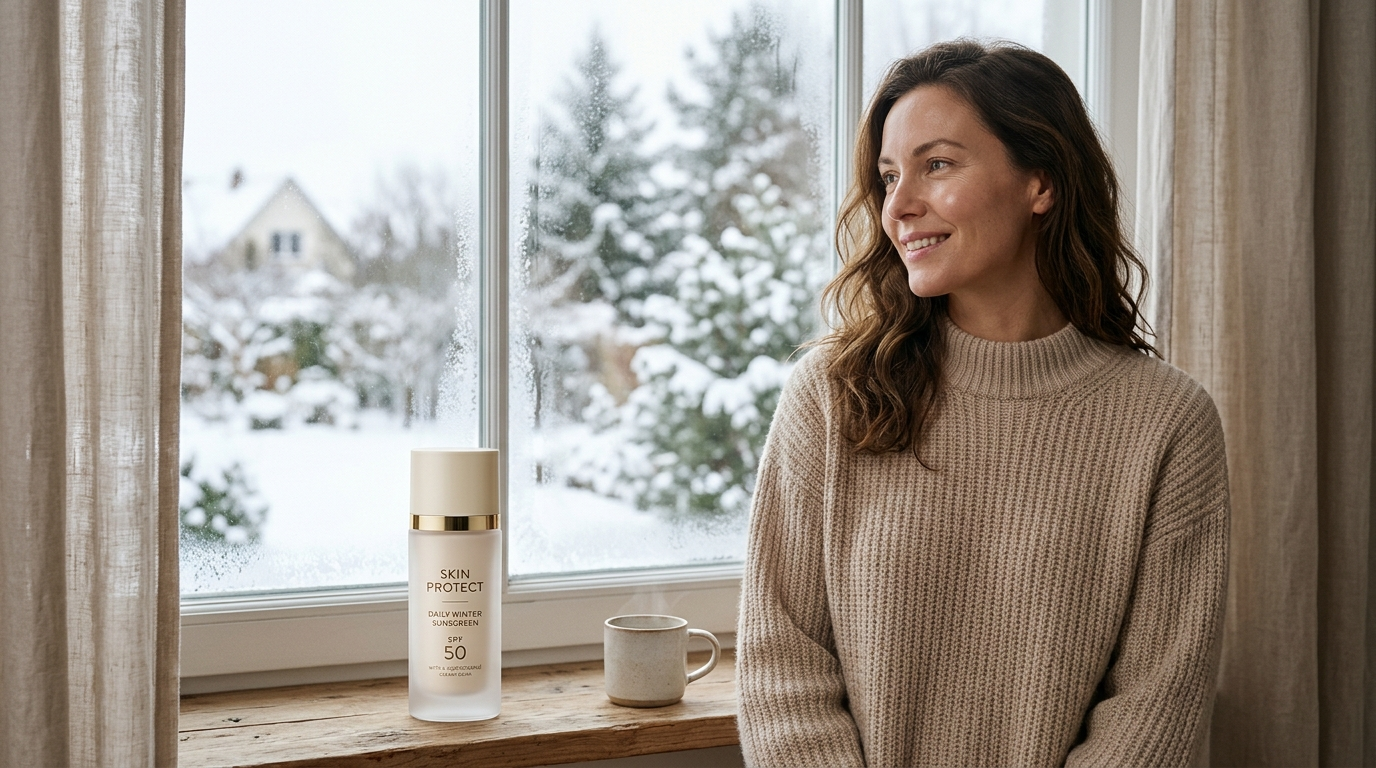
Many people make sunscreen a priority during the summer, but as temperatures drop in winter, some tend to reduce its use or stop applying it altogether, believing that the sun is not strong enough to harm their skin.
However, the truth is that your skin’s need for sun protection is not determined by temperature alone. Ultraviolet (UV) rays can affect your skin even on cold or cloudy days, making sunscreen an essential step in your skincare routine throughout the year.
In this article, we will explore the importance of sunscreen during winter, its benefits for your skin, and how to choose the right type based on your skin’s specific needs.
First: Why Is Sunscreen Important During Winter?
Even when the sun is not clearly visible, it does not mean your skin is protected from ultraviolet (UV) radiation. There are two main types of UV rays you should understand:
-
UVA Rays: These penetrate deeper layers of the skin and contribute to visible signs of aging, such as wrinkles and fine lines. They may also contribute to increased pigmentation.
-
UVB Rays: These primarily affect the outer layers of the skin and are the main cause of sunburn.
UV exposure levels vary depending on the time of day, location, season, and UV index. However, lower temperatures alone do not mean that UV exposure is no longer harmful.
That is why using a broad-spectrum sunscreen helps protect your skin against both types of UV rays, especially if you spend time outdoors during the day.
Second: What Are the Benefits of Using Sunscreen Regularly?
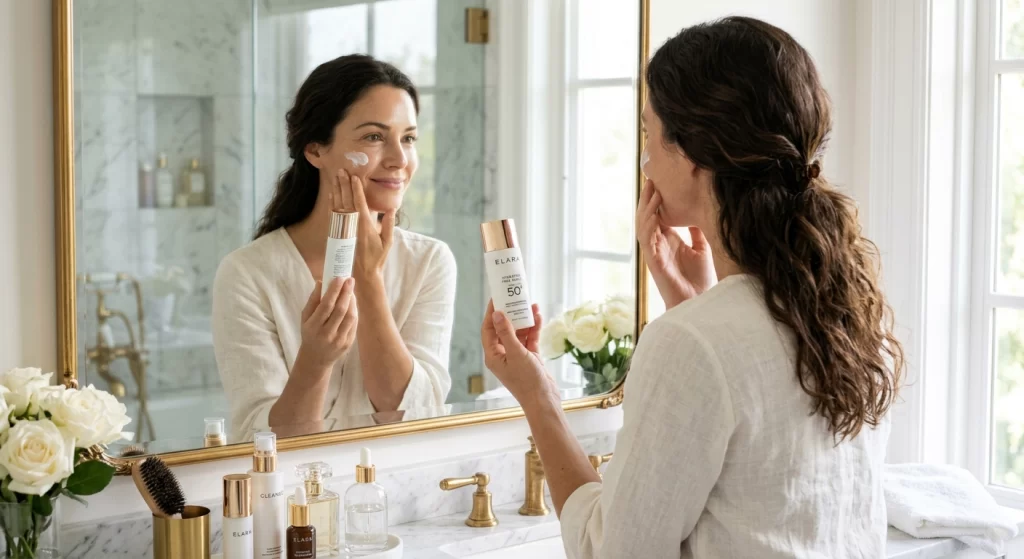
Sunscreen is more than just an additional step in your skincare routine. It is an essential way to help reduce the damage caused by repeated exposure to ultraviolet radiation.
1. Helping Reduce the Appearance of Premature Aging
Repeated sun exposure can contribute to the breakdown of collagen and elastin, two essential components responsible for maintaining skin firmness and elasticity. Regular sunscreen use helps minimize this effect and supports healthier-looking skin in the long term.
2. Helping Prevent Pigmentation and Dark Spots
UV radiation can stimulate melanin production, the pigment responsible for skin color. This may lead to the development of dark spots or make existing pigmentation more noticeable.
Sun protection is particularly important for people dealing with melasma or post-acne hyperpigmentation.
3. Reducing the Risk of Sunburn and Cumulative Sun Damage
Although the likelihood of sunburn may be lower on certain winter days, UV exposure is still possible. Using sunscreen alongside other sun-protective measures helps reduce the potential damage caused by sun exposure.
4. Supporting the Results of Your Skincare Routine
If you use products to treat pigmentation or improve your skin’s appearance, sun protection is an important part of your skincare routine.
Some treatments may increase your skin’s sensitivity to sunlight. Without adequate sun protection, you may experience reduced treatment benefits or a recurrence of pigmentation.
Third: How Do You Choose the Right Sunscreen for Your Skin Type?
Not all sunscreen formulations work equally well for everyone. Choosing the right formula makes it easier to use sunscreen consistently without experiencing discomfort.
1. Sunscreen for Oily and Acne-Prone Skin
If your skin produces excess oil or is prone to breakouts, choose a lightweight formula such as a gel or fluid sunscreen. Ideally, look for products labeled Non-comedogenic, meaning they are formulated to minimize the likelihood of clogged pores.
You may also prefer a matte finish if you want to avoid excessive shine.
However, remember that oily skin still needs hydration and sun protection. You do not need to choose a product that leaves your skin feeling dry just to control excess oil.
2. Sunscreen for Dry Skin
Dry skin may benefit from a sunscreen formula that combines sun protection with hydration.
Look for products containing ingredients such as glycerin and ceramides, which help retain moisture and support the skin’s natural barrier.
During winter, you may prefer moisturizing cream-based formulas over very lightweight textures, especially if you experience tightness or flaking.
Choose a product that feels comfortable on your skin without causing irritation.
3. Sunscreen for Sensitive Skin
If your skin is easily irritated or prone to redness and sensitivity, choose a fragrance-free product whenever possible, preferably one specifically formulated for sensitive skin.
Mineral sunscreens containing zinc oxide or titanium dioxide may be suitable options for some people with sensitive skin, although they are not necessarily the best choice for everyone.
Test the product on a small area of skin before applying it to your entire face. If irritation persists or occurs repeatedly, consult a dermatologist to identify the cause and determine the most suitable formulation.
4. Sunscreen for Combination Skin
Combination skin typically has oily areas, particularly across the forehead, nose, and chin (the T-zone), while other areas may be normal or dry.
In this case, choose a broad-spectrum sunscreen with a lightweight or medium-weight texture that provides adequate protection without making your skin feel excessively oily.
If certain areas experience dryness, you can apply a suitable moisturizer before sunscreen.
5. Sunscreen for Pigmentation- and Melasma-Prone Skin
If you have melasma or dark spots, consistent sun protection is particularly important as part of your skincare plan.
Choose a broad-spectrum sunscreen with an SPF of 30 or higher. Depending on your sun exposure and individual needs, you may prefer SPF 50+.
You may also consider a tinted sunscreen containing iron oxides, which can provide additional protection against visible light. This may be particularly beneficial for certain cases of melasma and hyperpigmentation, in addition to protection against ultraviolet radiation.
Fourth: What Are the Key Features to Look for When Buying Sunscreen?
Regardless of your skin type, there are several essential features you should consider when choosing a sunscreen:
-
SPF 30 or Higher: Helps protect your skin against the UVB rays responsible for sunburn.
-
Broad-Spectrum Protection: Ensures protection against both UVA and UVB rays.
-
Water Resistance When Needed: If you exercise, sweat frequently, or spend time in the water, choose a water-resistant sunscreen and follow the water-resistance duration indicated on the packaging.
-
A Formula Suitable for Your Skin Type: The best sunscreen is one that provides the required protection and feels comfortable enough for you to use consistently.
It is also important to remember that a higher SPF does not mean you can apply less sunscreen or skip reapplication.
Fifth: How Should You Apply Sunscreen Correctly?
Choosing the right product is an important first step, but how you apply it also makes a significant difference in the level of protection you receive.
1. Apply an Adequate Amount
Apply a sufficient amount to your face, neck, and all exposed areas of your skin. Using less than the recommended amount may reduce the actual level of protection.
2. Apply It at the Right Time
Follow the instructions on the packaging. Sunscreen is generally recommended to be applied approximately 15 minutes before sun exposure.
3. Reapply Regularly
If you spend time outdoors, reapply sunscreen approximately every two hours, and after swimming, excessive sweating, or towel drying.
If you spend the day indoors, away from windows, your need for reapplication may vary depending on your level of sun exposure.
4. Don’t Forget Your Neck and Ears
Sun protection is not just for your face. Make sure to protect your neck, ears, the backs of your hands, and any other areas exposed to sunlight.
5. Use Additional Sun Protection Measures
Sunscreen is an essential part of sun protection, but it does not replace other protective measures. Whenever possible, avoid intense sunlight, stay in the shade, and wear a hat, sunglasses, and appropriate protective clothing.
Sixth: Do You Need to Wear Sunscreen Even on Cloudy Days?
Yes. In many cases, sunscreen remains important even when the sky is cloudy because clouds do not block all ultraviolet radiation.
However, your need for sun protection should be assessed based on the UV index, duration of exposure, location, and the activities you engage in. In general, sun protection measures are recommended when the UV index reaches 3 or higher.
Additionally, if you spend time near windows, keep in mind that some UVA rays can pass through ordinary glass, although the level of exposure varies depending on the type of glass and your location.
Conclusion
Sunscreen is not a seasonal skincare product reserved for summer. It is an essential part of your skincare routine throughout the year, particularly when you are exposed to sunlight during the day.
Choose a broad-spectrum sunscreen with an appropriate SPF, consider your skin type and individual needs, and apply it in the correct amount and manner.
If you experience melasma, persistent pigmentation, or skin sensitivity, consulting a dermatologist can help you determine the most suitable skincare routine for your condition.