Postpartum Hair Loss: Is It Normal?
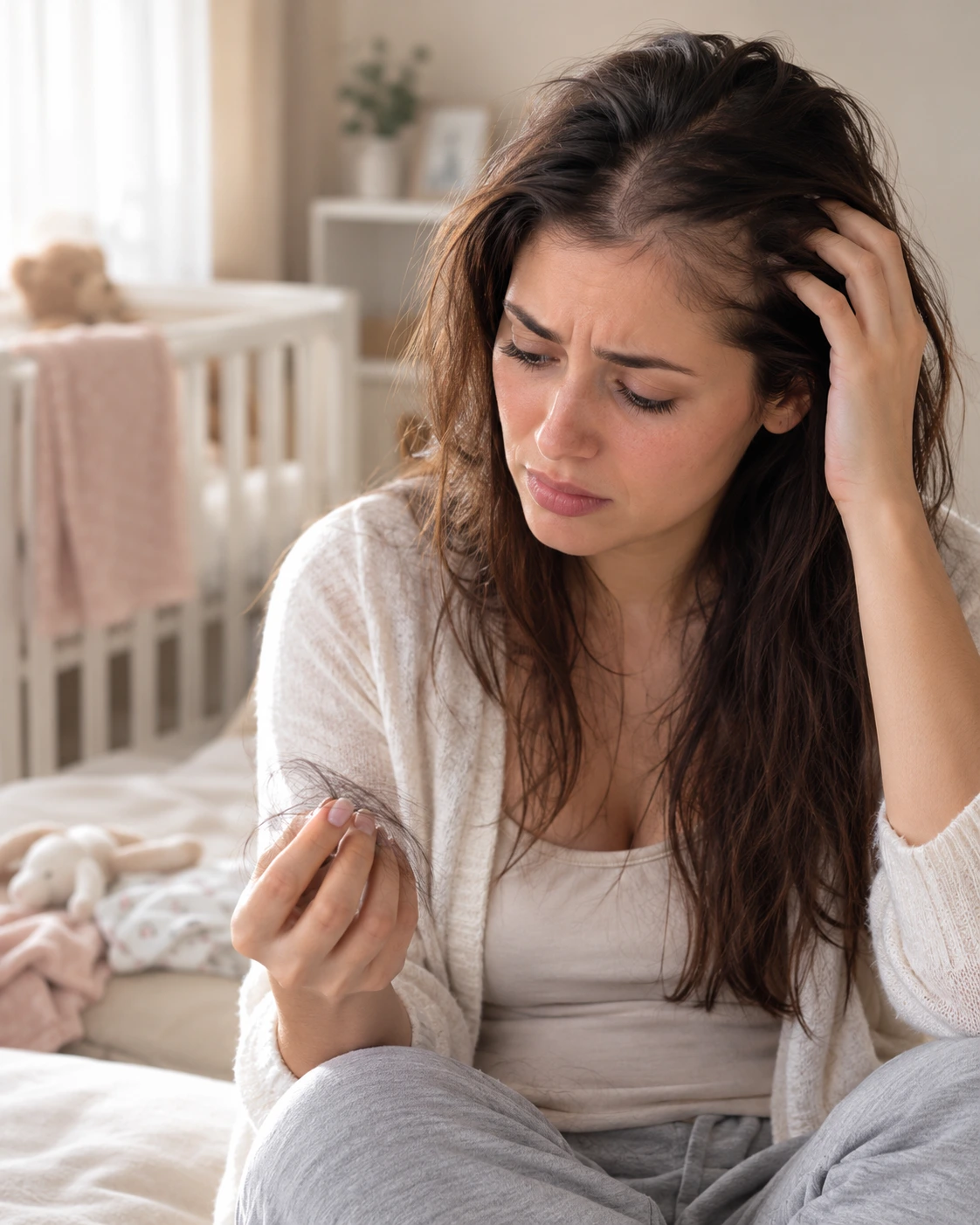
Noticing more hair than usual on your pillow, in the shower, or on your hairbrush after
giving birth can be alarming. However, increased hair shedding after pregnancy is common
and is usually temporary.
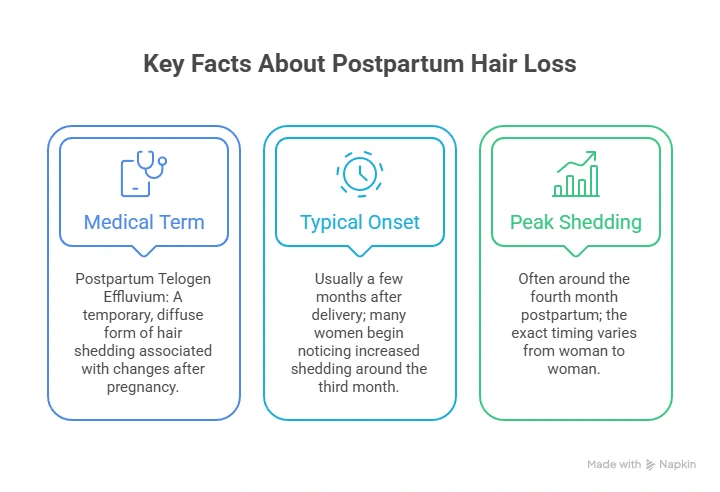
Postpartum hair loss is commonly associated with telogen effluvium, a temporary form of
diffuse hair shedding that can occur after major hormonal or physical changes.
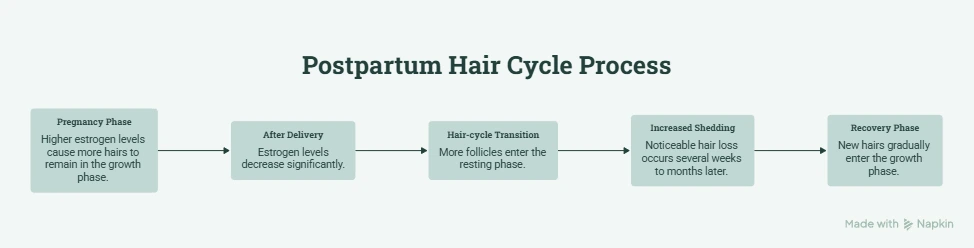
During pregnancy, higher estrogen levels keep more hairs in the active growth phase for
longer. After delivery, estrogen levels fall, and more hairs gradually enter the resting phase
of the hair cycle. The result is increased shedding that usually becomes noticeable several
weeks to a few months after childbirth.
For most women, the shedding gradually improves and hair density returns over time.
Important: Not every case of postpartum hair loss is caused by hormonal
changes alone. Persistent shedding, progressive thinning, or patchy hair loss may
require medical assessment to identify other contributing factors.
Key Facts About Postpartum Hair Loss
How Is It Evaluated?
Clinical assessment ± scalp trichoscopy
The doctor may use scalp examination and trichoscopy to evaluate the pattern of hair loss
and look for other causes.
Are Blood Tests Always Needed?
Not necessarily
Blood tests may be recommended when the medical history or examination suggests
nutritional deficiencies, thyroid problems, anemia, or another contributing condition.
Is It Permanent?
Usually not
Postpartum shedding is generally temporary, and hair growth gradually returns as the hair
cycle normalizes.
When Should You Seek Medical Advice?
If shedding is prolonged, severe, progressive, or associated with other symptoms
Persistent hair loss may indicate another condition that needs evaluation.
What Causes Postpartum Hair Loss?
Hair naturally moves through a continuous growth cycle consisting of three main phases:
1. Anagen – Growth Phase
This is the active growth stage of the hair follicle. Most scalp hairs are normally in this
phase.
2. Catagen – Transition Phase
During this short phase, the follicle gradually reduces its growth activity.
3. Telogen – Resting Phase
The hair follicle enters a resting period before the old hair is released and eventually
replaced by a new growing hair.
During pregnancy, hormonal changes—particularly increased estrogen—keep more hairs
in the growth phase and reduce normal shedding.
After childbirth, estrogen levels decline. As the hair cycle adjusts, a larger number of hairs
move into the resting phase. The hairs do not necessarily fall out immediately; shedding
becomes noticeable later, which explains why postpartum hair loss often appears months
after delivery rather than immediately after childbirth.
The Postpartum Hair Cycle Explained
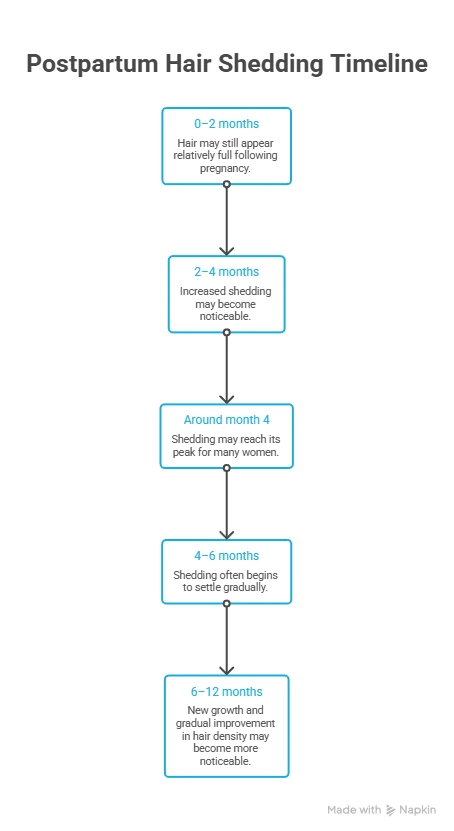
When Does Postpartum Hair Loss Start?
The timing varies, but a common pattern is:
Postpartum hair shedding commonly begins around three months after delivery and is
usually temporary. Cleveland Clinic notes that the shedding may last several months,
while hair fullness generally returns by around the baby’s first birthday for most people.
Individual recovery can vary.
Is Postpartum Hair Loss Always Just Hormonal?
No.
Although hormonal changes are a major factor, other conditions can contribute to hair
shedding or make recovery take longer.
Possible contributing factors include:
• Iron deficiency or anemia.
• Thyroid disorders.
• Inadequate nutritional intake.
• Significant physical or emotional stress.
• Rapid weight loss or restrictive dieting.
• Female pattern hair loss.
• Certain medications.
• Scalp disorders or inflammation.
For this reason, persistent or unusual hair loss should not automatically be attributed to
postpartum hormonal changes.
Frequently Asked Questions
Q1: Is postpartum hair loss permanent?
A: Usually, no.
Postpartum telogen effluvium is generally temporary. As the hair cycle normalizes, new
hair growth gradually replaces the hairs that have been shed. Most women eventually
regain much of their previous hair fullness.
Q2: When does postpartum hair loss usually start?
A: It commonly becomes noticeable a few months after childbirth. Many women notice
increased shedding around the third month, with shedding often reaching its peak around
the fourth month.
Q3: How long does postpartum hair shedding last?
A: The active shedding phase often lasts several months. Hair density then gradually
improves as new growth develops. Many women notice substantial recovery during the
first postpartum year.
Q4: Will biotin stop postpartum hair loss?
A: Not necessarily.
Postpartum telogen effluvium is primarily related to changes in the hair-growth cycle
following pregnancy. Biotin supplementation is not a universal treatment for postpartum
shedding, particularly when there is no documented deficiency.
Q5: Do I need blood tests?
A: Not necessarily.
Many cases of telogen effluvium can be assessed clinically. Blood tests may be
recommended when the doctor suspects contributing factors such as iron deficiency,
anemia, thyroid disease, or another nutritional or medical issue.
Q6: Can trichoscopy diagnose postpartum hair loss?
A: Trichoscopy can be a useful tool for examining the scalp and hair shafts and distinguishing
between different patterns of hair loss. However, diagnosis should consider the clinical
history and physical examination as well.
Q7: Can I use hair-loss medication while breastfeeding?
A: Do not start hair-loss medication during breastfeeding without discussing it with your
healthcare provider. Some hair-loss medications are not recommended during
breastfeeding, so the specific treatment must be reviewed individually.
Q8: Does every woman experience postpartum hair loss?
A: Postpartum shedding is very common, but the degree of shedding varies considerably
between women. Some notice only a mild increase in hair fall, while others experience
much more noticeable shedding