
Level Up Your Life with NAD IV therapy

Imagine waking up feeling refreshed, energized, and ready to conquer the world. No more sluggish mornings or afternoon slumps. Just boundless energy and mental clarity.

Sounds too good to be true? It’s not. Meet NAD+ IV therapy, a revolutionary treatment that could be the secret to unlocking your body’s full potential.

Picture this: You’re lying back, relaxing in a serene setting. A skilled medical professional gently inserts an IV into your arm. As the NAD+ solution flows through your veins, you can feel a sense of calm and rejuvenation washing over you.

But what exactly is NAD+?

NAD+, which stands for nicotinamide adenine dinucleotide. It’s a critical coenzyme found in every cell in your body that’s involved in hundreds of metabolic processes like cellular energy and mitochondrial health

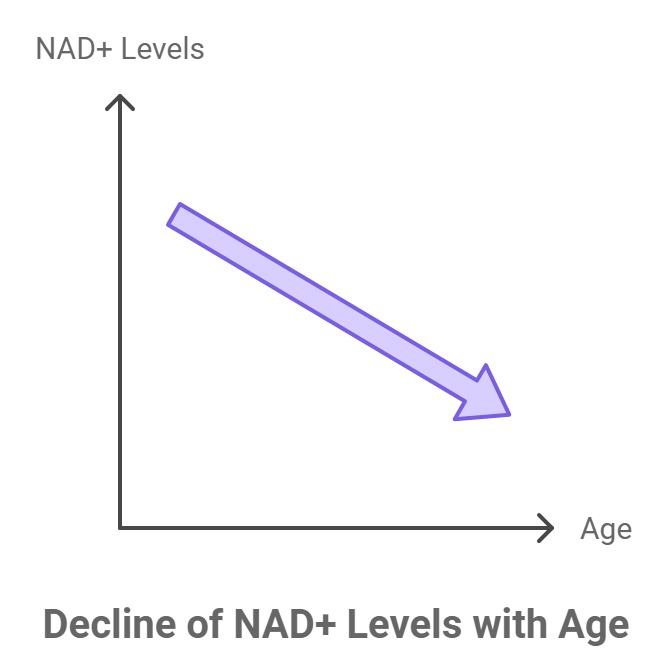
It plays a crucial role in energy production, cellular repair, and overall well-being. Over time, our NAD+ levels can decline, leading to fatigue, cognitive decline, and other signs of aging.

the body doesn’t have an endless supply of NAD+. In fact, it actually declines with age.

NAD+ IV therapy replenishes your NAD+ levels, providing a powerful boost to your body's energy production. This can lead to:
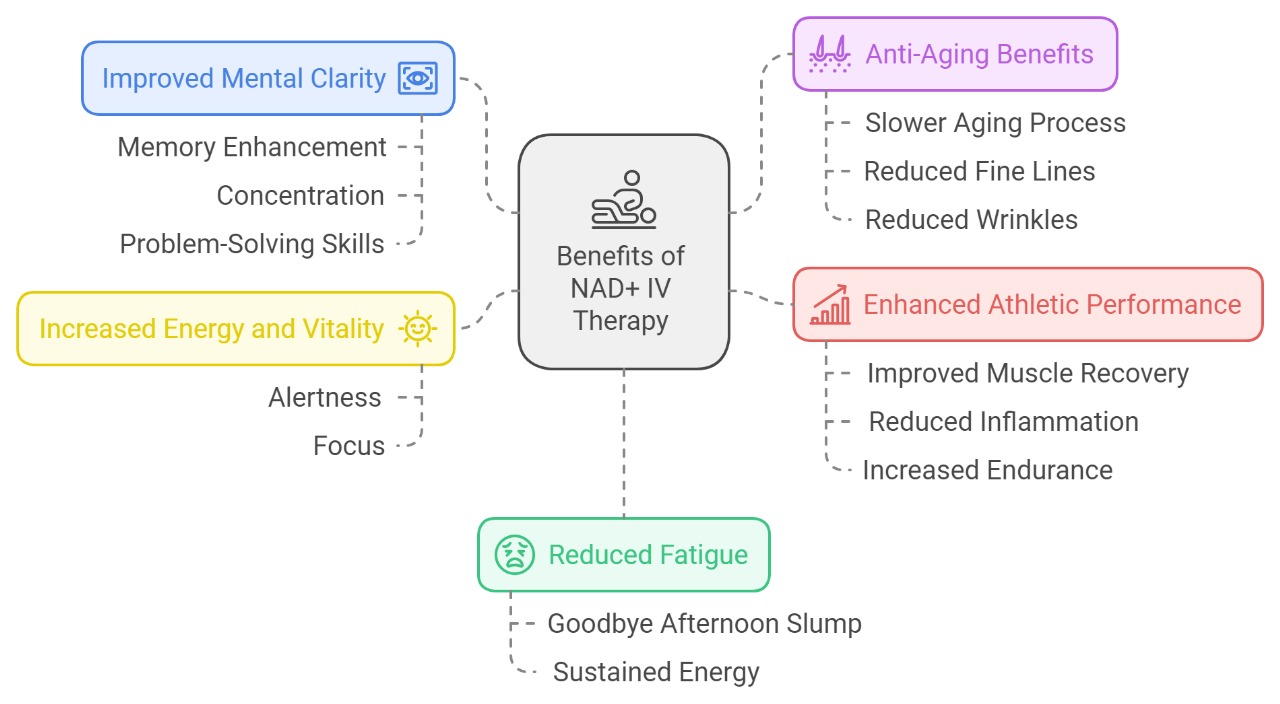
1-Increased energy and vitality:
Mitochondrial function: NAD+ is essential for the proper functioning of        mitochondria, the powerhouses of our cells. By boosting NAD+ levels, we can improve mitochondrial efficiency, leading to increased energy production.

Reduced fatigue: NAD+ helps combat fatigue by providing the cells with the energy they need to function optimally.

2-Improved mental clarity:
Neuroprotection: NAD+ plays a protective role in the brain, helping to prevent neuronal damage and dysfunction.

Memory enhancement: By supporting brain health, NAD+ can improve memory, concentration, and learning ability.

Reduced risk of cognitive decline: NAD+ may help reduce the risk of age-related cognitive decline, such as Alzheimer’s disease and dementia.

3-Enhanced athletic performance:
increase muscle mass: NAD+ can help increase muscle mass and strength, improving athletic performance.

Faster recovery: NAD+ can aid in muscle repair and recovery after exercise, reducing soreness and fatigue.

Improved endurance: By boosting energy production, NAD+ can help athletes sustain high levels of performance for longer periods.

NAD IV Therapy and Anti-Aging

Research has shown that NAD+ levels tend to decline with age
Benefits of NAD+ IV therapy for anti-aging:

Repairs damaged DNA: NAD+ helps repair damage to your DNA, slowing down the aging process.

 Increases energy production: NAD+ increases energy production in your   

 cells, boosting your physical and mental performance.

Activates anti-aging genes: NAD+ activates genes responsible for cellular repair and longevity.

Reduces inflammation: NAD+ reduces chronic inflammation, a major factor in aging.

Who can benefit from NAD+ IV Therapy?

People seeking to improve their overall health and well-being: Those experiencing chronic fatigue or low energy levels, individuals with cognitive decline or memory issues, people looking to reduce the signs of aging, and athletes and fitness enthusiasts.  

Individuals with specific health conditions: Those with chronic fatigue syndrome (CFS), fibromyalgia, neurodegenerative diseases, and metabolic disorders.  

HOW DOES NAD IV THERAPY WORK?
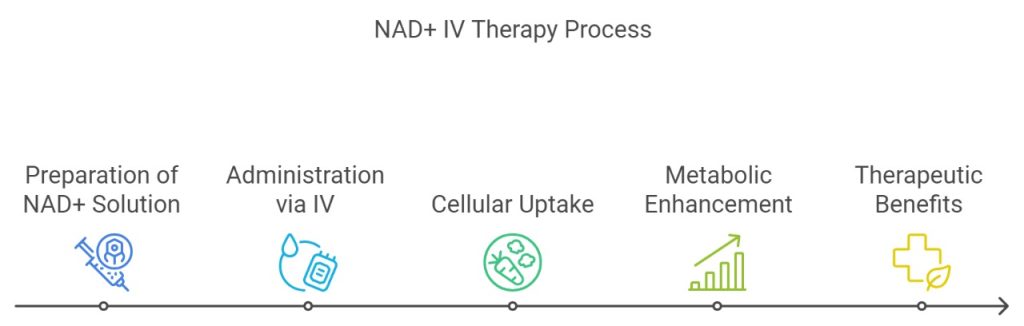
NAD+ IV therapy involves administering high doses of NAD+ directly into your bloodstream through an IV infusion. This allows the NAD+ to bypass your digestive system and be absorbed directly into the cells, where it can begin its work repairing DNA, boosting energy levels, and reducing inflammation.

The NAD+   infusion usually takes several hours and may require multiple       sessions over the course of several weeks. The exact dosage and frequency of the therapy will depend on the individual’s specific needs and medical history.

Is NAD+ IV therapy safe?

Yes, NAD+ IV Therapy is completely safe when administered by a qualified healthcare professional. Doctors prioritize safety by conducting a full medical consultation in which your medical history, allergies and requirements are reviewed before any treatment is carried out.

Common side effects of NAD+ IV therapy
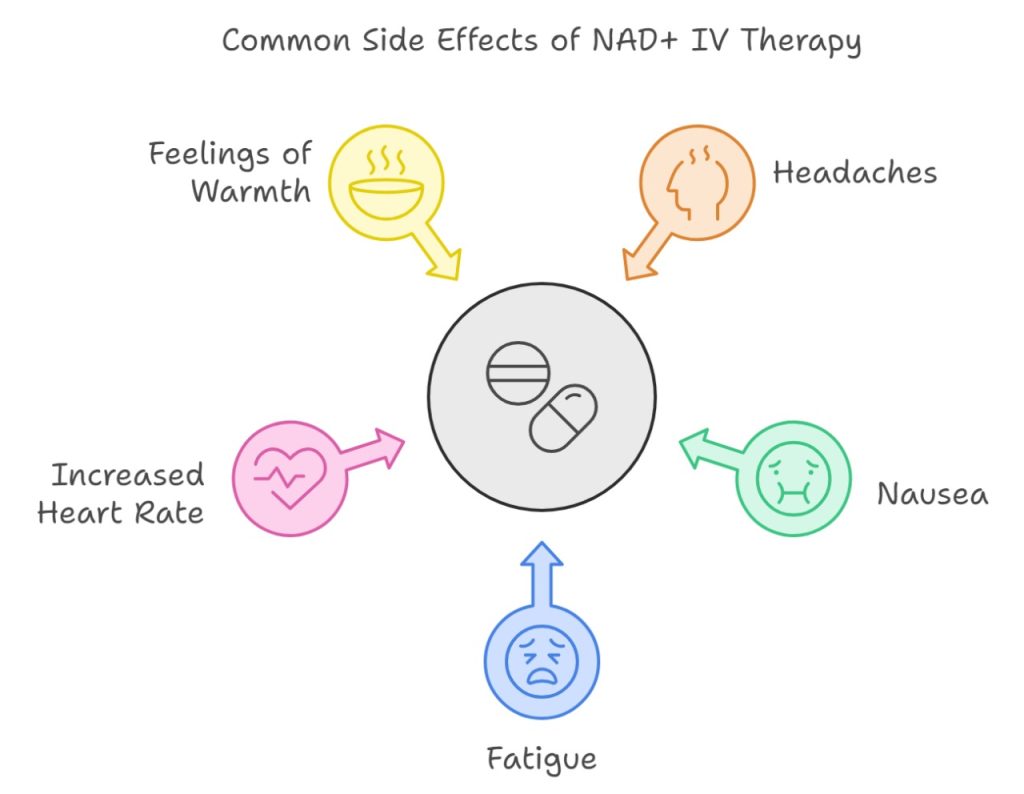
It is important to note that these side effects are generally mild and temporary, and typically resolve on their own within a few hours of the  NAD treatment

How long does NAD+ take to work?

The timeline for experiencing effects from NAD+ IV therapy can vary widely among individuals.

There isn’t a fixed or universally applicable timeframe for when the effects will be noticeable, as responses to the therapy depend on various factors, including an individual’s overall health, metabolism, and the specific reasons for undergoing the treatment.

Typically, a course of treatment spanning multiple sessions over the course of weeks or months might be necessary to experience the full range of benefits.

IV vs. Oral: Which is Right for You?

Imagine your body as a bustling city. NAD+ IV therapy is like a team of construction workers swooping in for a quick fix, while oral supplements are like a gradual rebuilding process. Choose IV therapy for immediate results or oral supplements for long-term maintenance. Consult with a healthcare professional to determine the best option for you.

At Everlast Wellness Medical Center, we pride ourselves on offering premium IV NAD+ therapy, designed to rejuvenate your body at the cellular level. Our medical-grade NAD+ formulation is sourced to ensure the highest quality and efficacy, providing you with a safe and potent treatment. Under the care of our expert medical consultants, you’ll receive personalized attention tailored to your health needs, making sure you get the most out of every session. Plus, we offer competitive pricing without compromising on the exceptional quality of care, making Everlast the trusted choice for those seeking professional and effective NAD+ therapy.


At Everlast Wellness, we offer NAD IV Therapy in two convenient volumes to suit your needs:

  • 250 ml for a quick, revitalizing boost
  • 500 ml for a more comprehensive, longer-lasting treatment

Choose the right option to rejuvenate your body and mind with the power of NAD IV Therapy!

References:

Related Services

NAD IV Therapy Package

Share This Article

What Is a Dermatologist and How they can assist you to treat hair, skin and nail problems?

What Is a Dermatologist and How they can assist you to treat hair, skin, and nail problems?

A dermatologist is a special care doctor that diagnoses and treats conditions that affect your hair, skin, and nails. They also can treat conditions that affect mucous membranes, or the delicate tissue that lines your nose, mouth, and eyelids.

The primary reasons for these visits include treating:

  • skin lesions
  • acne
  • skin rashes
  • discoloration or pigmentation

Beyond these medical and cosmetic issues, a dermatologist can also help recognize the signs and symptoms of serious underlying health issues.

For example, a condition like diabetes can cause symptoms that impact your skin’s appearance. A dermatologist may be the first healthcare provider to recognize the signs.

The Centers for Disease Control and Prevention (CDC) estimates that there are 43 million trusted Source visits to dermatologists every year.

This post will take a deeper look at what a dermatologist can treat and the procedures they perform. If you want to know when it might be time to make an appointment to see a dermatologist in Abu Dhabi, we have helped too.

What is dermatology?

Dermatology is an area of medicine that focuses on health issues affecting the skin, hair, nails, and mucous membranes.

The skin is the largest organ of the body. It is also the first line of defense against pathogens and injury, and it can be a good indicator of overall health. It contains nerve endings, sweat glands, hair follicles, pores, blood vessels, and many other structures. Caring for it is important to your overall health.

Common Conditions

Being a dermatologist requires a great depth of clinical knowledge, including, for example, the various internal health problems that can cause skin symptoms.

Dermatologists can treat more than 3,000 conditions. Below are some examples of those that they see most commonly:

Acne: Among the most prevalent skin issues, acne has a range of causes that can lead to different types of pimples. Some people experience scarring, low self-esteem, and other complications.

Dermatitis and eczema: Dermatitis is inflammation of the skin, and it typically leads to swelling with an itchy rash. There are various forms, including atopic dermatitis, which is the most common type of eczema.

Fungal infections: These are common and sometimes involve the skin, nails, and hair. A group of yeasts called Candida can cause a wide range of fungal infections, including oral thrush, ringworm, athlete’s foot, and balanitis.

Hair loss: About 80 million people in the U.S. have hereditary hair loss. A range of health issues can also cause hair loss, including head lice, which affects around 6–12 million children aged 3–11 years in the U.S. annually.

Warts: These are contagious, benign skin growths that appear when a virus has infected the top layer of skin. A dermatologist can use a variety of treatments to remove persistent warts.

Nail problems: Dermatologists also treat health issues that damage the skin around and under the nails. Ingrown nails, fungal infections, and various other conditions can cause this damage.

Vitiligo: This involves the skin losing melanin, a pigment. As a result, some patches of skin are lighter in color than others.

Psoriasis: This chronic autoimmune disorder speeds up the growth of skin cells, resulting in patches of skin that may be thick, red, purple, or silvery and scaly. There are several types of psoriasis.

Rosacea: This causes redness in the face, sometimes with pus-filled bumps, visible blood vessels, and swelling of the eyelids. Symptoms can spread from the nose and cheeks to the forehead, chin, ears, chest, and back.

Shingles, or herpes zoster: This viral infection causes a rash that may be painful. It may clear in a few weeks without treatment, but medical intervention can help speed recovery and prevent complications, which can be severe.

Skin cancer: About 1 in 5 people in the U.S. develop a type of skin cancer by age 70. The most common forms are basal cell carcinoma, melanoma, and squamous cell carcinoma.

Type of dermatology procedures

Some procedures that dermatologists regularly do include:

  • Biopsies. A dermatologist can perform different types of biopsy procedures to diagnose or rule out skin cancer or other conditions.
    Laser therapy. Laser therapy treatments may be used to remove warts, moles, sun spots, tattoos, acne scars, blemishes, wrinkles, or unwanted hair.
  • Surgical excision. A dermatologist may perform a surgical excision to remove growths like moles, skin tags, and lesions. This is usually done with local anesthesia so you don’t feel pain.
  • Cryotherapy. Cryotherapy is a unique treatment that involves controlled exposure to extremely cold temperatures. It can be used to treat skin conditions like warts, skin tags, and some tumors.
  • Sclerotherapy. Sclerotherapy is a procedure that helps treat spider and varicose veins. It involves injecting chemicals into damaged veins which help to diminish the appearance of these types of veins.
  • Mohs surgery. This type of skin cancer surgery removes thin layers of tissue around a tumor. Between each removal, the doctor examines the skin for signs of additional cancer cells. When no more cancer cells are found, they stop removing tissue.
  • Chemical peels. Chemical peels remove damaged skin. Peels can help rejuvenate new skin and reduce signs of aging.
  • Cosmetic injections. A dermatologist can help diminish the appearance of wrinkles and sagging skin by injecting Botox or fillers during an office visit.
  • Dermabrasion. This exfoliating technique can reduce the appearance of fine lines, age spots, acne scars, and precancerous skin patches.
  • Tumescent liposuction. Dermatologists use liposuction to remove unwanted fat from targeted areas of your body.

When to see a dermatologist?

If skin, hair, or nail symptoms are not responding to home treatment, it may be time to seek professional attention.

If concerns are cosmetic, a person can seek out a specialized cosmetic dermatologist.

It is important for people to discuss any upcoming dermatological treatments with their insurance providers, who often do not fund cosmetic procedures.

Be sure to obtain copies of any medical reports, consultation notes, and diagnostic test results to assure the insurer of the medical necessity of the treatment.

Share This Article

International Women’s Day

What is international women’s day (IWD)?

International Women’s Day is a global day celebrating women’s social, economic, cultural, and political achievements. The day also marks a call to action for moving towards gender parity. Gender parity has the same meaning as gender equality.

IWD – Show your support and solidarity

International Women’s Day has taken place on March 8th for more than 100 years. This annual day celebrates the achievements of women and encourages action and discussion on issues of gender equality. These discussions are important, as there are many examples of inequality between men and women.

Gender equality – Education

Across the world, over 60% of the people who cannot read are women.
At least 60% of the world’s countries have fewer girls enrolled in high school than boys.
Generally, when girls have an education, they marry later, have fewer children, and earn higher wages.

Gender equality – Poverty

Single mothers with children are more likely to be poor than single fathers with children.
Older women (65+) are more likely to be poor than older men when living alone.
World poverty could be cut in half if all adults completed high school.

Gender equality – in Leadership

Worldwide, women make up less than 25% of people in national parliaments.
Women in power are more likely to support policies that promote gender equality and social welfare.

Gender equality – Workforce

On average, women, over the course of their lives, earn less than men.
Less than 30% of the world’s researchers are women.
Women account for less than one-quarter of senior roles globally.

What can you do?

Celebrate the achievements of women in your local area and worldwide.
Respectfully speak up against people who choose to stereotype girls and women.
Talk about gender inequality when you see it in the media (television, magazines, the Internet).
Think about gender equality and stereotypes in the books and movies you watch.

Share This Article