
Last Updated: November 2, 2026
Dry skin is a condition that occurs when the skin loses moisture or is unable to retain it adequately. This can lead to tightness, roughness, flaking, itching, and increased sensitivity. In some cases, dryness may begin with subtle signs that often go unnoticed before becoming more noticeable and affecting the skin’s comfort and appearance.
You may assume your skin is fine simply because it is not visibly peeling or because you do not experience itching. However, dryness can sometimes begin with a mild feeling of tightness after washing your face, an unusual skin texture, or increased sensitivity to products you previously used without any problems.
This is why it is important to recognize your skin’s needs before symptoms become more severe.
In this guide, we will explore the hidden signs of dry skin, its common causes, its relationship with the skin’s natural barrier, and when you should consult a dermatologist.
What Is Dry Skin?
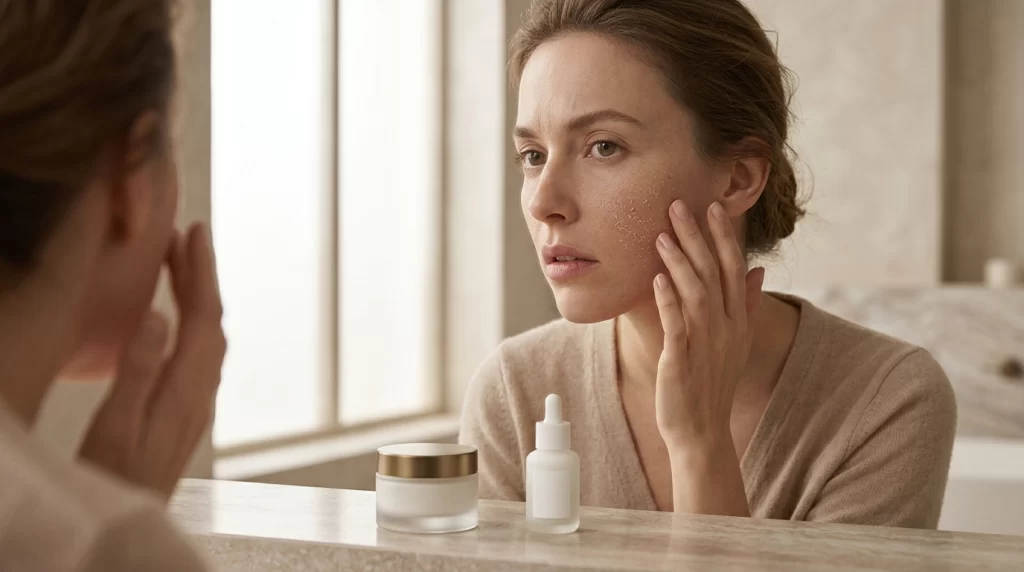
Dry skin refers to a condition in which the skin lacks sufficient water or surface lipids (natural oils) that help maintain its softness, elasticity, and natural protective function.
It is important to distinguish between two conditions that may appear similar:
Dry Skin: A condition often associated with a lack of natural oils that protect the skin’s surface. It may appear as roughness, flaking, and a feeling of tightness.
Dehydrated Skin: A condition associated with reduced water content in the outer layers of the skin. It can affect all skin types, including oily skin.
This means that oily skin is not immune to dryness or dehydration. You may notice excess shine on your face while simultaneously experiencing tightness or small flaky patches.
Therefore, the amount of oil your skin produces is not enough to determine its hydration level.
Why Can Dry Skin Develop Without You Noticing?
Dry skin does not always begin with severe symptoms. Your skin condition may gradually change due to everyday factors, making the early warning signs easy to overlook.
1. Using an Unsuitable Cleanser
Using a harsh cleanser or washing your face too frequently may strip away some of the natural oils that protect the skin’s surface.
After cleansing, you may notice that your face feels tight or that its texture has changed. If this happens regularly, your skin may become more prone to dryness and irritation.
What can you do?
Choose a gentle cleanser suitable for your skin type, and avoid excessively hot water and harsh scrubbing. If tightness persists after cleansing, it may be a sign that your cleansing routine needs to be adjusted.
2. Over-Exfoliation
Some women use chemical or physical exfoliants to improve skin texture and minimize the appearance of pores and pigmentation.
However, exfoliating too frequently or combining multiple active ingredients without a suitable skincare plan may cause irritation and dryness and affect the skin barrier’s function.
Signs may include redness, stinging when applying moisturizer, or increased skin sensitivity.
Remember: Exfoliating more frequently does not necessarily produce better results. Appropriate use depends on the product type, concentration, and your skin’s condition, rather than the desire to achieve faster results.
3. Exposure to Air Conditioning and Dry Air
Low humidity in your surrounding environment can affect the amount of water your skin loses. As a result, you may notice increased dryness after spending long hours in air-conditioned spaces or dry environments.
Tightness may become more noticeable after a long day, even if you have not changed your skincare products.
4. Neglecting Moisturizer Because of Oily Skin
One common misconception is that oily skin does not need moisturizer.
In reality, oil production and the skin’s ability to retain water are two different processes. Therefore, oily skin may still need a suitable moisturizer that helps maintain hydration without feeling heavy on the skin.
Choosing the right formula is more important than avoiding moisturizers altogether.
5. Age-Related and Hormonal Changes
Your skin’s needs may change as you age. Certain hormonal changes can also affect skin hydration and elasticity.
Some women may notice increased dryness or changes in skin texture during certain stages of life.
However, not all dryness should be attributed to hormones. Several factors may contribute, including weather conditions, skincare routines, skin conditions, and certain medications.
Hidden Signs of Dry Skin You Should Not Ignore
The early signs of dry skin may be subtle, but they deserve attention if they occur repeatedly or persist over time.
1. Tightness After Washing Your Face
If your skin feels tight immediately after cleansing, especially if the sensation lasts for a while, this may indicate dryness or that your cleanser is not suitable for your skin.
2. Changes in Skin Texture
Your skin may feel less smooth, or you may notice small rough patches when touching your face.
Sometimes, applying makeup becomes more difficult because certain areas appear flaky or uneven.
3. Increased Sensitivity to Skincare Products
If products you regularly use suddenly cause stinging, burning, or redness, your skin may be irritated, or its natural protective barrier may not be functioning as effectively as it should.
However, these symptoms are not definitive signs of dryness. They may also indicate sensitivity to a particular ingredient or an underlying skin condition that requires professional assessment.
4. Fine Flaking
Small flakes may appear around the nose, cheeks, or mouth. Sometimes, they are so subtle that you only notice them when applying makeup or looking closely in the mirror.
5. Temporarily More Noticeable Fine Lines
A lack of water in the outer layers of the skin may make fine lines appear more noticeable.
However, this does not necessarily mean that your skin has undergone permanent aging. Its appearance may improve once adequate hydration is restored.
6. Recurrent Itching or Redness
Dry skin may be accompanied by itching or redness. If these symptoms are severe or persistent, they may indicate another condition, such as eczema or dermatitis.
For this reason, it is best not to rely solely on changing skincare products without seeking medical evaluation when symptoms persist.
How Is Dry Skin Related to the Skin's Natural Barrier?
The skin barrier is the outermost protective layer of the skin. It helps reduce water loss and acts as an important line of defense against irritants and environmental factors.
You can think of this barrier as a protective layer that helps your skin retain moisture and maintain the right environment for its normal function.
When the skin barrier becomes damaged or irritated, water loss may increase, making the skin more prone to tightness, roughness, and redness.
This can create a recurring cycle:
Dryness or irritation begins.
The skin becomes more sensitive to certain products and external factors.
Strong skincare products are introduced in an attempt to resolve the problem quickly.
Irritation increases, and dryness may persist or worsen.
For this reason, the solution is not always to add more products. Sometimes, your skin needs a simpler routine, fewer irritants, and time for its protective barrier to recover.
Frequently Asked Questions
Yes. Your skin can be oily while also experiencing dehydration or a compromised skin barrier. Oil production does not necessarily mean that your skin retains enough moisture.
That is why choosing a suitable moisturizer is recommended rather than neglecting hydration altogether.
Dryness and dehydration may have overlapping symptoms, such as tightness, roughness, and flaking.
However, identifying the underlying cause requires more than looking at your skin's appearance. An assessment should consider your skin type, the products you use, environmental factors, and any accompanying symptoms.
Drinking an adequate amount of water is important for your overall health, but drinking water alone does not address all causes of dry skin.
Your skin may also need an appropriate moisturizer, fewer irritating products, and, in some cases, treatment for an underlying medical condition.
Not always. Exfoliation may increase irritation and dryness, especially if the skin barrier is already compromised.
The appropriate use of exfoliants depends on your skin's condition, the type of product, and how frequently it is used. It may be best to avoid exfoliation temporarily when noticeable irritation is present.
Dryness can make fine lines appear temporarily more noticeable, but this does not necessarily mean that permanent wrinkles have developed.
Appropriate hydration can improve the skin's appearance, while signs of aging are influenced by multiple factors.
If your dryness is persistent or severe, accompanied by itching, redness, or painful cracks, or does not improve with appropriate skincare, it is best to consult a dermatologist to identify the cause and determine the most suitable treatment plan.
At Everlast Wellness: Skincare Begins with Understanding Your Skin's Needs
understanding its condition, reviewing your skincare routine and the factors that may affect it, and then identifying the most appropriate steps based on medical assessment.
Your skin does not always need more products. It needs care that is tailored to its actual needs.
Don’t wait until dryness becomes obvious. Pay attention to the subtle signs and give your skin the care it deserves.