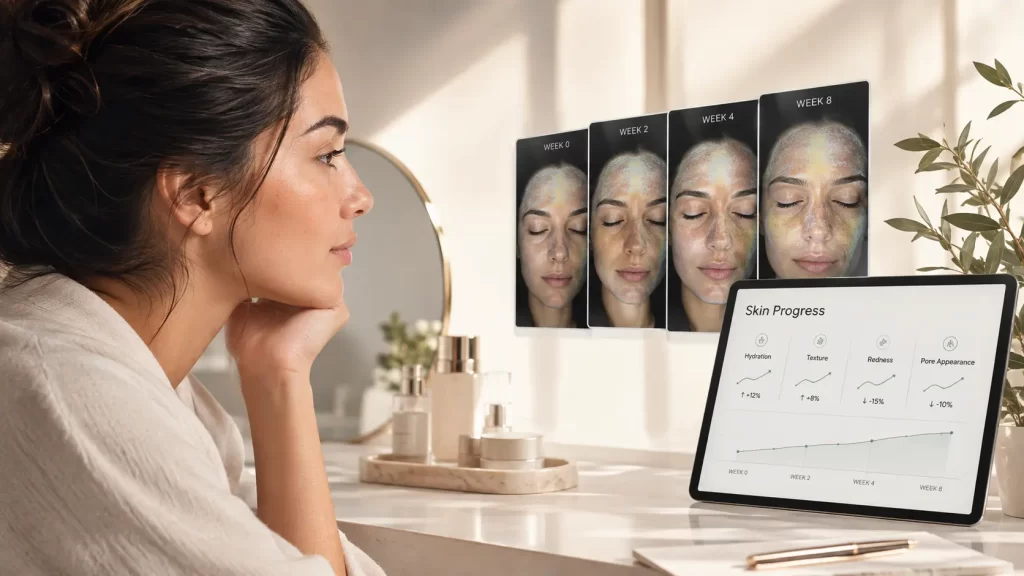

After months of sun and heat exposure, the skin may begin to show various changes, including loss of radiance, altered texture, dryness, fine lines, pigmentation, or redness.
In an environment like Abu Dhabi, where ultraviolet (UV) exposure is combined with heat, dry air, and frequent exposure to air conditioning, reassessing the skin after summer can be an important step in understanding its specific needs.
However, these changes do not have the same cause in everyone. This is why medical skin care begins with a clinical assessment to identify the underlying concern before selecting any technology or treatment.
One of the emerging approaches within Regenerative Aesthetics and Skin Rejuvenation is Exosome Therapy, which involves extracellular vesicles and their role in cell-to-cell communication
What Happens to the Skin After Repeated Sun Exposure?
Ultraviolet radiation, particularly UVA and UVB, is associated with multiple biological changes in the skin following repeated exposure. These include oxidative stress, alterations in cellular repair mechanisms, and changes in the remodeling of the skin’s structural components.
With continued UV exposure, different manifestations of Photoaging may develop, including:
- Changes in skin texture.
- Fine lines and wrinkles.
- Pigmentation irregularities.
- Changes in skin elasticity.
- Loss of radiance.
- Overall changes in the appearance of the skin.
These changes are associated with multiple biological processes, including oxidative stress, inflammatory signaling, and alterations in the Extracellular Matrix (ECM), including important components such as collagen and elastin.
For this reason, post-summer skin assessment is not limited to observing what appears on the surface. It involves identifying the nature of the changes and their possible underlying causes
What Are Exosomes?

Exosomes are small extracellular vesicles released by cells that participate in cell-to-cell communication.
These vesicles carry a range of biological molecules, including certain proteins, lipids, and nucleic acids. They can transfer signals between cells and influence a variety of cellular processes.
It is important to distinguish Exosomes from Stem Cells.
Exosomes are not stem cells and do not contain living cells themselves. In addition, Extracellular Vesicles (EVs) is a broader term than exosomes, so the two terms should not always be used interchangeably.
The characteristics of materials used in different protocols may vary depending on their source, preparation methods, biological content, and method of application
How Can Exosomes Be Associated With Skin Rejuvenation?
Exosomes are extracellular vesicles involved in cell-to-cell communication and carry biological molecules that may influence several cellular processes associated with tissue health and regeneration.
In the skin, this cellular communication is associated with processes such as regulation of inflammatory responses, cellular interactions, and remodeling of the extracellular matrix, which plays an important role in maintaining skin structure and function.
For this reason, exosomes are used in some Skin Rejuvenation protocols with the aim of supporting the skin’s cellular environment and improving certain indicators of skin quality, such as:
- Skin texture.
- Hydration.
- Elasticity.
- The appearance of fine lines.
Outcomes can vary depending on the condition of the skin, the source of the exosomes, how they are prepared, the method of delivery, and the medical protocol used.
Exosome Therapy After Summer in Abu Dhabi
Sun exposure does not automatically mean that the skin needs Exosome Therapy.
The primary concern may instead be dryness or a compromised skin barrier. In other cases, pigmentation may be the main issue, there may be visible signs of photoaging, or there may be an underlying skin condition requiring a different diagnosis and treatment approach.
This is where Medical Skin Assessment becomes important.
Rather than selecting a technology based on a single visible concern, the skin is assessed to determine what it actually needs first. The doctor can then determine whether Exosome Skin Treatment is appropriate as part of the treatment plan.
What Are the Potential Benefits of Exosome Skin Treatment?
Recent clinical studies have reported improvements in certain indicators of skin quality following the use of protocols involving exosomes or extracellular vesicles.
These indicators have included:
- Skin hydration.
- Skin elasticity.
- Skin texture.
- The appearance of fine lines and wrinkles.
- Certain pigmentation indicators.
- Overall skin appearance.
However, these findings should not be considered guaranteed outcomes for every product or every individual.
Clinical studies can differ in terms of the source of the materials used, application methods, number of sessions, and methods used to assess outcomes.
Therefore, Exosome Therapy is not a standardized treatment with one universal protocol for every patient.
Exosome Therapy Abu Dhabi: Why Assessment Matters More Than the Technology Name
After an Abu Dhabi summer, the skin may benefit from reassessment—but not every change requires the same solution.
The priority may be pigmentation, the skin barrier, redness, skin texture, or signs of photoaging.
For this reason, choosing Exosome Therapy Abu Dhabi should not begin with the technology itself. It should begin with the individual needs of the skin.
At Everlast Wellness Medical Center, the approach begins with:
Diagnosis → Identifying the Concern → Evaluating the Options → Selecting the Appropriate Protocol → Follow-Up
Because:
We Diagnose Before We Treat.
Conclusion
Exosome Therapy has become part of the field of Regenerative Aesthetics and Skin Rejuvenation, based on the biological role of extracellular vesicles in cell-to-cell communication.
Clinical studies have associated exosome- or extracellular-vesicle-based protocols with improvements in certain indicators of skin quality, including hydration, elasticity, texture, the appearance of fine lines and wrinkles, certain pigmentation indicators, and overall skin appearance.
However, exosomes are not one single product or one standardized protocol. Their source, preparation, biological content, delivery method, and accompanying procedures are all important factors when evaluating an Exosome Skin Treatment.
That is why the best starting question is not:
“Are exosomes right for me?”
but rather:
“What does my skin specifically need?”
From there, medical assessment can help determine whether Exosome Therapy is appropriate as part of a Skin Rejuvenation plan or whether another treatment may be more suitable for the individual’s skin condition and goals.